Link: Learn more about the Chase Sapphire Reserve® Card
The Chase Sapphire Reserve® Card is one of the most popular premium credit cards on the market. If this is a card that has been on your radar, this is the ideal time to apply, given the welcome offer that’s currently available. I’d argue that picking up this card is a no-brainer, if eligible.
In this post, I’d like to take an in-depth look at the Chase Sapphire Reserve. If you’re willing to put in the effort, this card can absolutely be worth it in the long run, especially if you value airport lounge access.
Chase Sapphire Reserve bonus & fee basics
The Chase Sapphire Reserve is a card that has it all — a great welcome bonus, excellent perks, a rewarding points structure, valuable lounge access, and much more. The Chase Sapphire Reserve was built on the fundamentals of the Chase Sapphire Preferred® Card (review), so is the higher annual fee of the Sapphire Reserve warranted? Let’s start with the basics, like the welcome bonus and annual fee.
Limited time welcome offer of 150K bonus points
The Chase Sapphire Reserve is offering a welcome bonus of 150,000 Ultimate Rewards points after spending $6,000 within the first three months. This is a fantastic welcome offer, the best we’ve ever seen on the card.
Personally, I value Ultimate Rewards points at 1.7 cents each, so to me, the points are worth $2,550. That’s massive, and a huge incentive to pick up this card.
Card bonus eligibility restrictions & credit score tips
Officially, here are the restrictions when it comes to applying for the Chase Sapphire Reserve:
We’ve seen Chase tweak bonus eligibility rules over time, and under the current rules, the card essentially follows a “once in a lifetime” rule for the bonus on this card specifically.
That means you likely won’t be eligible for the bonus on this card if you currently have it, or if you have had it in the past. However, eligibility for this card (including the bonus) is unrelated to whether you have or have had the Chase Sapphire Preferred® Card (review), Sapphire Reserve for Business℠ (review), etc.
Chase now uses a pop-up feature during the application process, which should let you know if you’re not eligible for the bonus on a card (this appears after submitting your application), before there’s a hard pull on your credit.
It’s also worth being aware that Chase will often let you product change from one card to another, assuming you’ve had a card for at least 12 months. For example, if you apply for the Sapphire Reserve, you could later downgrade it to the Sapphire Preferred. Just keep in mind you wouldn’t be eligible for the bonus on a card if you get it through a product change.
What kind of a credit score do you need to get approved for the Chase Sapphire Reserve? Credit card issuers don’t publish a minimum credit score required to be approved for a card, though in general, I’d recommend having an excellent credit score to be approved for the card. I wouldn’t apply for the Sapphire Reserve if my credit score were under 700, and ideally, it would be over 740.
It’s possible to get approved with a lower score, and it’s also possible to be denied with a higher score. There are many factors that go into card approval, including your income, your existing relationship with Chase, and more.
$795 annual fee & $195 authorized user fee
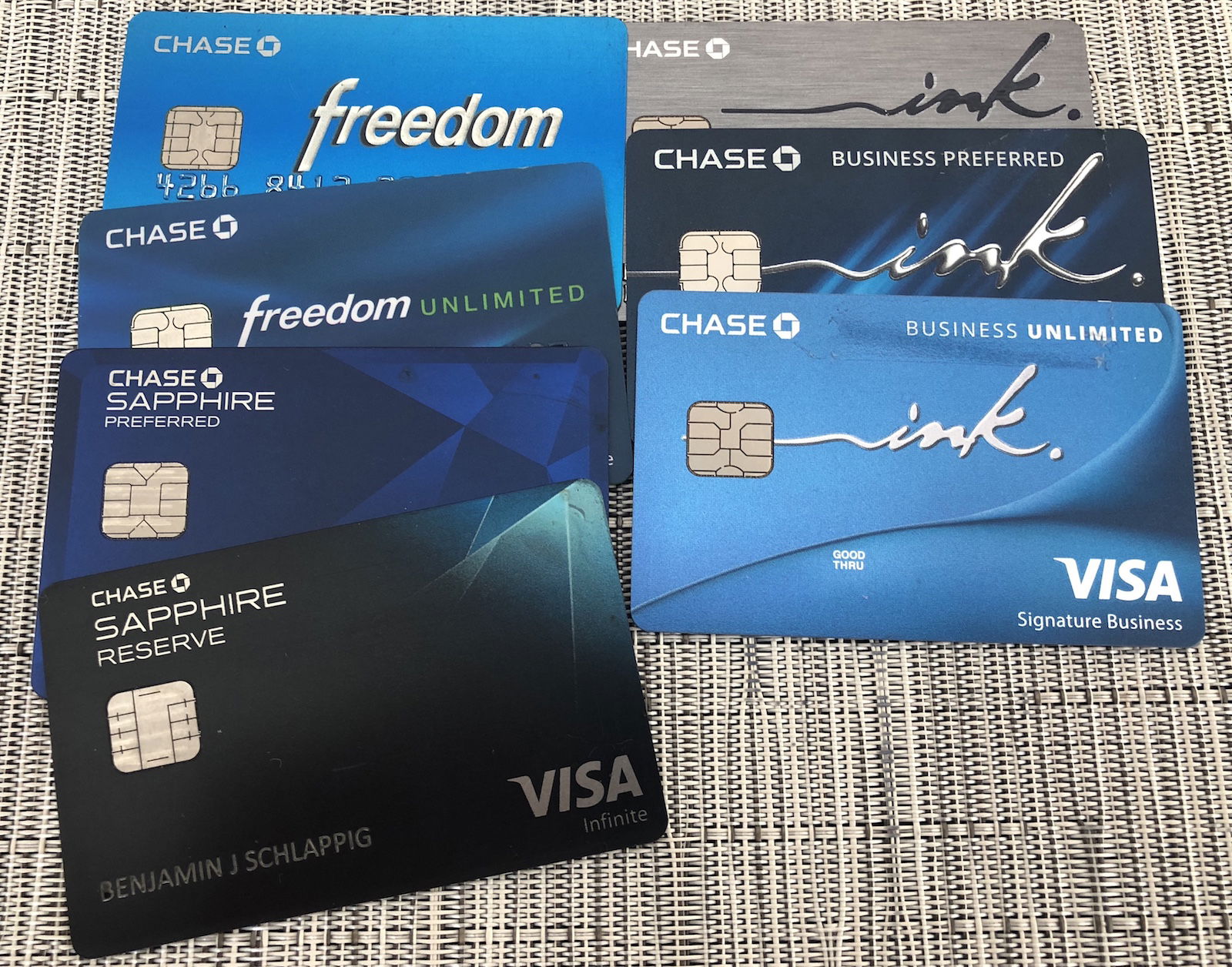
The Sapphire Reserve has a $795 annual fee. Among the super-premium credit cards out there, this is at the high end of the fees, given that the card was recently refreshed. The good news is that the card offers all kinds of benefits that should help cardmembers offset that fee.
You can add authorized users to the Sapphire Reserve, and there’s a $195 fee per person. Some people will find this to be worthwhile — not only do authorized users get all the increased points earning rates, but they get a Priority Pass™ Select membership, access to Chase Sapphire Lounges, access to select Air Canada Lounges, etc.
Chase Sapphire Reserve points earning structure
The Chase Sapphire Reserve has a very lucrative points earning structure, thanks to some well-rounded bonus categories. When picking a credit card, I always recommend getting one that has bonus categories that match up with your spending profile. Some cards offer bonus points on dining, gas stations, supermarkets, etc., so pick the card that works best for you.
8x points on Chase Travel portal bookings
The Sapphire Reserve offers 8x points on all purchases through Chase Travel℠, which is Chase’s travel portal. This includes spending on flights, hotels, rental cars, and more. While there’s sometimes an opportunity cost to booking this way, I’d consider this to be pretty awesome, since earning 8x points on flight bookings is industry leading.
Since I value Ultimate Rewards points at 1.7 cents each, to me that’s the equivalent of a 13.6% return on travel spending, but only through Chase Travel. I’d consider that to be pretty enticing.

5x points on Lyft rides
Chase and Lyft have a partnership, and with this, the Sapphire Reserve earns 5x points on Lyft rides, valid through September 30, 2027. To me, that’s the equivalent of an 8.5% return on Lyft spending, making this one of the best cards for rideshare spending.
4x points on direct flight & hotel bookings
The Sapphire Reserve offers 4x points on flights and hotels that are booked direct. That means if you book a flight directly with an airline or a hotel stay directly with a hotel (rather than through an online travel agency), you get an excellent return on that spending.
Based on my valuation of points, that’s the equivalent of a 6.8% return on that spending. That makes this among the best cards for airfare and hotel spending.

3x points on dining
The Sapphire Reserve offers 3x points on dining purchases globally. Chase’s dining category is pretty broad, and includes everything from sit-down restaurants, to fast food. While there are other competitive cards for dining, this is a solid bonus for this spending, as I value this at a 5.1% return.
No foreign transaction fees
The Sapphire Reserve has no foreign transaction fees, so this is an excellent card to use for purchases globally, since you can earn valuable rewards while not being stuck with those fees, which are sometimes 3%.
Best of all, I find that a large percentage of my purchases abroad are in the categories of dining, hotels, and airfare, so I can avoid foreign transaction fees while also maximizing points — that’s the best of both worlds!

$75,000 annual spending bonus benefits
If you spend $75,000 per calendar year on the Sapphire Reserve, you receive a slew of extra benefits, including the following:
• IHG One Rewards Diamond status, which is IHG’s top tier status, offering perks like complimentary breakfast, room upgrades, and more
• Southwest Rapid Rewards A-List status, offering perks ranging from priority seating to free checked bags
• A $500 Southwest credit, for flights booked via Chase Travel
• A $250 Shops at Chase credit, valid for purchases with select brands, including Baccarat, Bang & Olufsen, Breitling, Tumi, and more
Everyone will value these perks differently, but I’d say this has the potential to factor nicely into the overall value proposition of spending on the card.
Chase Sapphire Reserve points redemption options
The Chase Sapphire Reserve earns Ultimate Rewards points, which I find to be one of the most valuable flexible points currencies. Not only that, but having the Sapphire Reserve means that you can potentially redeem your points for more than you could if you had other cards. As I’ll explain below, there are a couple of ways that you can most efficiently redeem your Ultimate Rewards points.
Transfer points to airline & hotel partners
My favorite way to redeem Ultimate Rewards points is to transfer them to one of the Chase Ultimate Rewards airline or hotel partners. Points transfer at a 1:1 ratio, and this is a great option if you want to book aspirational travel, like staying at a five star hotel or redeeming for first or business class travel.
Just make sure you study up on this, and learn the tips & tricks of maximizing points. Below are the Ultimate Rewards transfer partners.
Redeem points for up to 2.5 cents each toward travel
You can also redeem Ultimate Rewards points through Chase’s website, for everything from gift cards, to flight and hotel redemptions. Typically, Ultimate Rewards points will get you a minimum of one cent per point of value toward travel redemptions, though thanks to the Points Boost feature, you can sometimes get more value with points than that.
For example, if you have the Sapphire Reserve, you can redeem points for up to 2.5 cents each toward select The Edit by Chase Travel luxury hotel bookings, and also at an improved rates toward airfare on select airlines. The exact value you get is constantly changing, and it’s extremely rare to find redemptions of 2.0 cents per point or more. So they’re worth looking for, but I don’t consider this to something you can really rely on.

Chase Sapphire Reserve lounge access perks
The Chase Sapphire Reserve offers excellent airport lounge access perks, and this is something that has become even more valuable in recent times, as Chase has continued to invest in its network of airport lounges. This could be a great reason to not only pick up the card, but also to add authorized users to the card, since they get the same lounge access perks.
Priority Pass™ Select membership
The Chase Sapphire Reserve offers a Priority Pass™ Select membership, which gets you access to the world’s largest collection of independent lounges. Best of all, this membership allows you to take two guests with you at no additional cost.
Priority Pass has 1,300+ airport lounges around the world, so access to these lounges will prove useful to just about any traveler.

Chase Sapphire Lounge access
The Chase Sapphire Reserve offers Chase Sapphire Lounge access. These lounges are exceptional, among the best credit card lounges out there, and among the best in the United States. While the lounges in the United States can be accessed once annually for all Priority Pass members, those with a Priority Pass™ Select membership through the Chase Sapphire Reserve receive unlimited visits annually, with the ability to bring two guests.
This network of lounges is a huge reason to consider picking up this card, as these lounges really are a treat, especially the ones at Boston Logan, New York LaGuardia, and Philadelphia.
Air Canada Maple Leaf Lounge access
The Chase Sapphire Reserve offers Air Canada Lounge access. This is valid at select Air Canada Lounge locations, and you must be traveling Air Canada or a Star Alliance partner airline in order to get lounge access.
Note that for Air Canada Lounges, one complimentary guest is allowed, and then additional guests can be brought in for an extra fee. It’s pretty awesome to get access to Air Canada’s airport lounge facilities without otherwise having a membership, since there’s not another US-issued card that offers this.

Chase Sapphire Reserve benefits & credits
What really sets the Chase Sapphire Reserve apart is the incredible benefits that it offers, including lots of credits. While the card has a steep annual fee, it potentially offers thousands of dollars in annual value from its benefits.
Many people should be able to come out ahead on the annual fee with these credits and other perks. At a minimum, they should help massively offset the annual fee, making holding onto the card more justifiable, so that you can maximize the return on spending and lounge access, among other things. Let’s go over all the details.
Up to $500 annual The Edit by Chase hotel credit
The Sapphire Reserve offers up to $500 in annual hotel credits. This benefit is specifically valid for hotel bookings with The Edit by Chase Travel, which is Chase’s collection of luxury hotels, where cardmembers can receive extra perks when booking through the program. In order to take advantage of this credit, cardmembers need to book a stay of a minimum of two nights, with the “pay now” feature.
The way this works, you can receive a $250 credit up to twice per calendar year, based on eligible bookings. Personally, I wouldn’t value this credit at close to face value, since many hotels belonging to the portfolio are quite expensive. That’s not to say that people won’t get use from this benefit, but I just wouldn’t factor this into the math on the card too much.
Up to $300 annual travel credit
The Sapphire Reserve offers up to $300 in annual travel credits. While quite a few credit cards offer travel credits, there are typically lots of strings attached. That’s not the case with this credit, which couldn’t be easier to use.
There’s no registration required, and any purchases that are coded as travel will be reimbursed automatically. This could include flights, rideshares, taxis, train tickets, hotels, and more. You don’t have to use the entire credit in one transaction, but rather, can use it across as many transactions as are needed.
Note that this benefit is based on the anniversary year rather than the calendar year, and you can track your progress with using this benefit on Chase’s website or app. Since I consider this to basically be good as cash, I tend to think this lowers the card’s out of pocket by around $300.

Up to $300 annual dining credit
The Sapphire Reserve offers up to $300 in annual dining credits. This benefit is valid at a limited number of restaurants in major cities, and you can find a full list here.
This credit is semi-annual, meaning you can get a $150 credit in January through June, and a $150 credit in July through December. Admittedly the list of eligible restaurants is quite small. Personally, I value this at close to face value, since some of my favorite restaurants in Miami are on the list, while others will probably struggle to maximize this perk.
Up to $300 annual Stubhub & viagogo credit
The Sapphire Reserve offers up to $300 in annual entertainment credits. This benefit is valid for the purchase of concert and event tickets with Stubhub and viagogo.
This credit is semi-annual, meaning you can get a $150 credit in January through June, and a $150 credit in July through December. Note that this benefit is currently valid through December 31, 2027.
Up to $300 annual DoorDash credit & DashPass
The Sapphire Reserve offers benefits with DoorDash. For one, you receive a complimentary DashPass membership, valid for at least one year, if you activate by December 31, 2027. This is a value of up to $120 per year.
With DashPass, you pay a $0 delivery fee when ordering from thousands of restaurants and grocery stores nationwide. Certain minimums apply in order to get the $0 delivery fee. You also receive reduced service fees.
On top of that, the card offers up to $300 in DoorDash credits each year, in the form of up to $25 in monthly credits. However, this is broken down quite a bit — it includes a $5 monthly promo credit to spend on restaurant orders, and two $10 promo credits to spend on groceries, retail, and more.
Personally, I wouldn’t place much value on this in terms of justifying the annual fee, but some people will certainly still save.
Up to $288 annual Apple TV+ & Apple Music benefit
The Sapphire Reserve offers benefits with Apple. Cardmembers can receive a complimentary subscription to Apple TV+ and Apple Music, through June 22, 2027. This benefit is a value of up to $288 per year. So if you’d otherwise pay for that, it’s a pretty substantial savings amount.
Up to $250 one-time Chase Travel Hotels credit
In addition to the up to $500 annual hotel credit with The Edit by Chase Travel, the Sapphire Reserve also offers up to $250 in hotel credits on a one-time basis. This is specifically valid through December 31, 2026, when booking select hotels through Chase Travel Hotels.
Specifically, it works for prepaid Chase Travel hotel bookings for stays with IHG Hotels & Resorts, Montage Hotels & Resorts, Pendry Hotels & Resorts, Omni Hotels & Resorts, Virgin Hotels, Minor Hotels, and Pan Pacific Hotels and Resorts, with a two night minimum stay required. While this isn’t an ongoing perk, it sure can add quite a bit of one-time value.
Up to $120 annual Lyft credit
In addition to 5x points on Lyft rides, the Sapphire Reserve also offers up to $120 in annual Lyft credits. This credit is monthly, meaning you receive a $10 credit each month. This can be applied toward Lyft rides for Standard, Extra Comfort, XL, Black, or Black SUV ride modes. This benefit is currently valid through September 30, 2027.
Global Entry, NEXUS, or TSA PreCheck credit
The Chase Sapphire Reserve offers a Global Entry, NEXUS, or TSA PreCheck credit once every four years. Just charge the membership fee to your card, and it will automatically be reimbursed. It doesn’t matter who the fee is being paid for, as long as you charge it to your eligible card.
Primary rental car coverage
The Chase Sapphire Reserve offers primary collision damage waiver coverage against damage up to the cost of most rental car vehicles provided you decline the CDW coverage offered by the rental agency. This includes economy through luxury class vehicles, vans that carry fewer than seven passengers, and SUVs. You’ll want to check your cardmember agreement for full details.
Valuable travel & purchase coverage
The Sapphire Reserve is a Visa Infinite Card, so comes with all kinds of great travel and purchase protection.
What’s especially awesome is that you earn bonus points for many travel purchases with the card, so you can put your travel purchases on this card, and then automatically be covered with the benefits. Airline mileage award tickets qualify for this benefit as well, assuming you put the taxes on the Sapphire Reserve.
Below are the basic details of the coverage, though you’ll want to consult the cardmember agreement for all the details.
Is the Chase Sapphire Reserve worth it?
The Chase Sapphire Reserve has become an extremely popular card over the years. Admittedly the product recently underwent a refresh, so people will feel differently about the card than before — some people find it more valuable than in the past, while others don’t.
Personally, I find this card to be easy to justify. Here’s how I generally approach the math on the card:
• While the $795 annual fee is steep, I consider the $300 annual travel credit to basically be worth face value, lowering the real out of pocket on this card to $495 per year
• Then there are the hundreds in extra credits, which people will value differently; for me, the $300 dining credit is good as cash, while I get big value from some of the other credits, but don’t necessarily factor them into the math
• The card offers exceptional lounge access, including a Priority Pass™ Select membership, Chase Sapphire Lounge access, Air Canada Lounge access, and more
• The card has a great rewards structure, particularly earning 8x points on Chase Travel purchases, 4x points on direct airline and hotel bookings, and 3x points on dining
• The card also offers amazing travel coverage and rental car protection, which is a perk that any frequent traveler should have
Personally, I think the math on the card checks out nicely, at least in my situation. That being said, if you can’t stomach the annual fee, I think the Chase Sapphire Preferred is a useful alternative, and I think for some cardmembers that could make more sense.

Consider the Chase Freedom Unlimited as well
If you have the Sapphire Reserve, then you should also consider getting the no annual fee Chase Freedom Unlimited® (review). Why? Because the Chase Freedom Unlimited offers points that can be pooled with the Sapphire Reserve, and it offers 1.5x points on all purchases.
The best strategy is to have both cards and put spending eligible for bonus categories on the Sapphire Reserve (where you earn 3-8x points), and all your other spending on the Freedom Unlimited (where you earn 1.5x points, rather than 1x points). To me, that’s among the best credit card duos out there.
Showdown: Sapphire Preferred vs. Sapphire Reserve
The Sapphire Reserve is the evolution of the Chase Sapphire Preferred® Card (review), so which of the two cards is better? Here’s a comparison of a few factors:
• Welcome bonus — the Sapphire Preferred has a welcome bonus of 75,000 bonus points after spending $5,000 within three months, while the Sapphire Reserve has a welcome bonus of 150,000 bonus points after spending $6,000 within three months
• Annual fee — the Sapphire Preferred has a $95 annual fee, while the Sapphire Reserve has a $795 annual fee
• Points earning — the Sapphire Preferred offers 3x points on dining, online grocery purchases, and select streaming services, 2x points on travel, and 10% anniversary points bonus, while the Sapphire Reserve offers 8x points on Chase Travel, 4x points on flights and hotels booked directly, and 3x points on dining
• Other perks — the cards have some overlap in terms of benefits, though the Sapphire Reserve has the edge of offering a bunch of benefits, including up to $500 in annual hotel credits, up to $300 in annual travel credits, up to $300 in annual dining credits, a Priority Pass™ Select membership, access to Chase Sapphire Lounges, a TSA PreCheck, NEXUS, or Global Entry fee credit every four years, Visa Infinite perks, and more
Long term I think the Sapphire Reserve could be worth it if you value lounge access, and if you can maximize the credits and other benefits. However, I think for many people, the Sapphire Preferred may be more compelling overall, and a better value — the card has some better bonus categories on spending (plus the 10% anniversary points bonus), and a $50 hotel credit, all with a much lower annual fee.
Showdown: Sapphire Reserve vs. Sapphire Reserve Business
The Sapphire Reserve for Business℠ (review) is based on the fundamentals of the Sapphire Reserve. What are the differences between the cards? Let me point out some of the things that differentiate the business version of the card, for better or worse:
• The Sapphire Reserve Business also offers a huge welcome bonus of 150,000 bonus points after spending $20,000 within three months
• While the bonus categories are largely similar, the exception is that the Sapphire Reserve offers 3x points on dining, while the Sapphire Reserve Business offers 3x points on select advertising
• The Sapphire Reserve Business has no annual fee for authorized users, but authorized users also don’t receive lounge access
• The Sapphire Reserve Business doesn’t offer Air Canada Lounge access, as that perk is exclusive to the personal version of the card
• The credits offered by the card different a bit, as the Sapphire Reserve Business offers credits with ZipRecruiter, giftcards.com, and more
There’s potentially merit to having both cards, though if I had to choose, I’d say the personal version of the card is probably a bit easier to justify, on average.
Bottom line
The Chase Sapphire Reserve is one of the most popular and compelling premium travel cards on the market. While it has a high annual fee, it also has very strong perks.
The Chase Sapphire Reserve is great for its lounge access benefits, including a Priority Pass™ Select membership, Chase Sapphire Lounge access, and even Air Canada Lounge access. The card also has an excellent rewards structure, offering bonus categories with 3-8x points per dollar spent.
The card’s annual fee can also largely be offset (or even be more than offset) with the credits and benefits offered, ranging from $300 in easy to use travel credits, to a slightly trickier $500 in hotel credits, to $300 in dining credits, to $300 in entertainment credits, and more.
Personally I find the annual fee to be easy enough to justify, but of course everyone should crunch the numbers for themselves.
To learn more about the Chase Sapphire Reserve Card, follow this link.