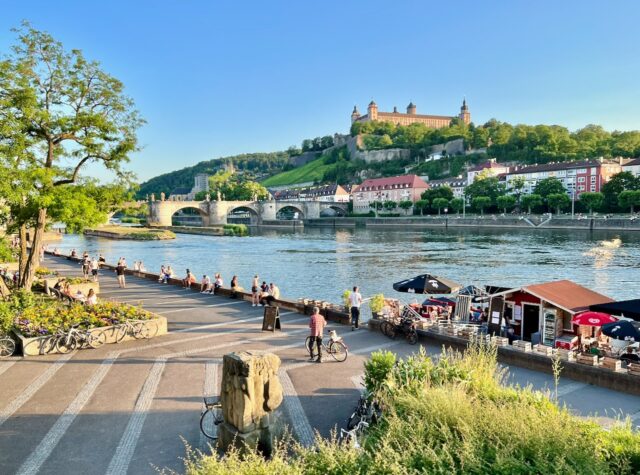
Würzburg is a university city in the region of Franconia in southern Germany. Nestled on the banks of the Main River, Würzburg is one of Germany’s most charming and culturally rich cities, making it absolutely worthwhile to visit. I’ve been to Würzburg several times now and I find its unique mix of Baroque splendour and Franconian joie de vivre absolutely captivating. It’s a city of towering steeples, surrounded by vineyard-covered hills. In the city centre, you’ll find impressive buildings, vibrant squares, historic wine cellars and an eclectic mix of architectural styles. Add to that a lively atmosphere, driven mostly by its population of 30,000 students, and a thriving cultural and culinary scene, and you have a city that’s a treat to explore and easy to return to. Based on my visits, I’ve listed the top things to see and do in Würzburg, and included sightseeing walking routes and restaurant recommendations.
My latest trip to Würzburg was part of a southern Germany rail tour during which I visited four of the 17 heritage cities known as Historic Highlights of Germany. Like the other heritage cities, Würzburg is a university city with a rich historical legacy and a vibrant cultural and culinary scene. Another similarity is that Würzburg has a compact old town that’s perfect to explore on foot.
A (brief) history of Würzburg
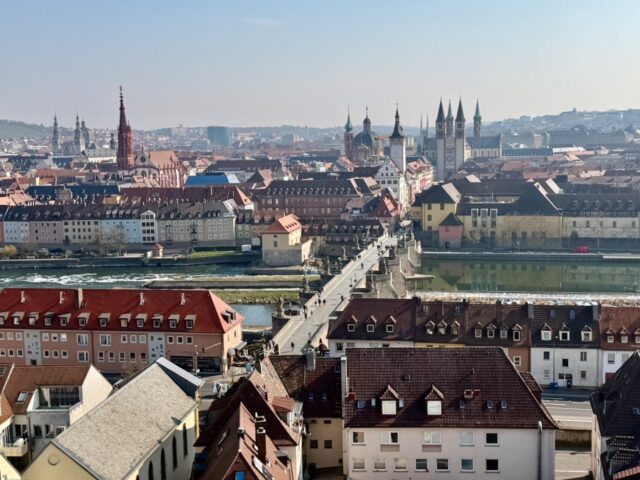
Würzburg’s history stretches back more than a thousand years, making it one of Bavaria’s oldest cities. It began as a Celtic settlement and was later occupied by the Franks in the 6th century A.D. During the Middle Ages, it grew into an important religious and political centre under the rule of powerful prince-bishops. For centuries, these rulers shaped the city’s cultural and architectural identity, commissioning grand churches, fortifications and palaces.
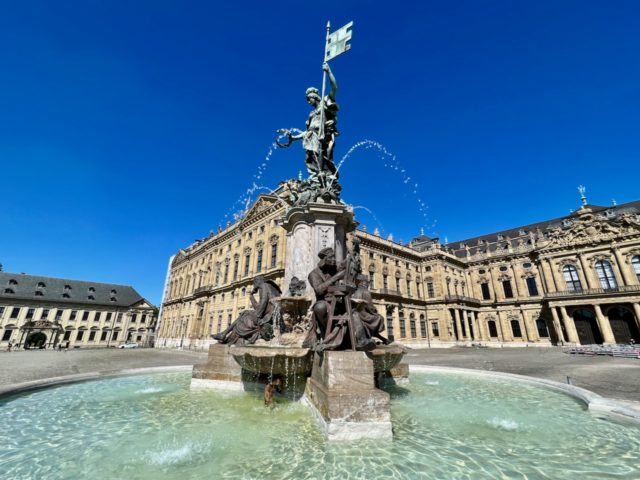
One of the defining periods in Würzburg’s history came in the 18th century, when the prince-bishops transformed the city into a Baroque masterpiece. The construction of the Würzburg Residence during this time marked the height of the city’s artistic and architectural ambition.
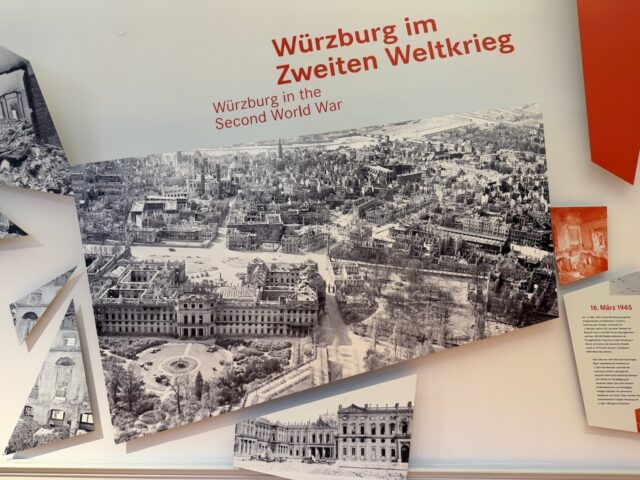
Much of Würzburg was devastated during World War II, particularly during an air raid on 16th March 1945 that destroyed 90% of the historic city centre. Despite this destruction, many of the most significant landmarks were painstakingly reconstructed, preserving Würzburg’s historic character.
Things to see in Würzburg on a walk around the city
There are many things to see in Würzburg, and due to the city’s compact size, most of the main attractions are within walking distance of each other. I’ve pinned the attractions in the map below and added suggested walking routes. In addition to a sightseeing route in the city centre, I’ve also included (uphill) walks to three attractions: the Marienberg Fortress, the Käppele Sanctuary and the Würzburg Wine Trail. The sequence of the highlights of Würzburg described below mirrors the walking routes in the map.
1. Marktplatz
Würzburg’s Altstadt (Old Town) is compact, walkable, and full of character. Strolling through its cobbled streets reveals charming squares, historic buildings and vibrant markets. The Marktplatz, or Market Square, is a bustling hub where you can sample local foods like bratwurst, browse fresh produce and soak up the city’s atmosphere.
2. St. Mary’s Chapel
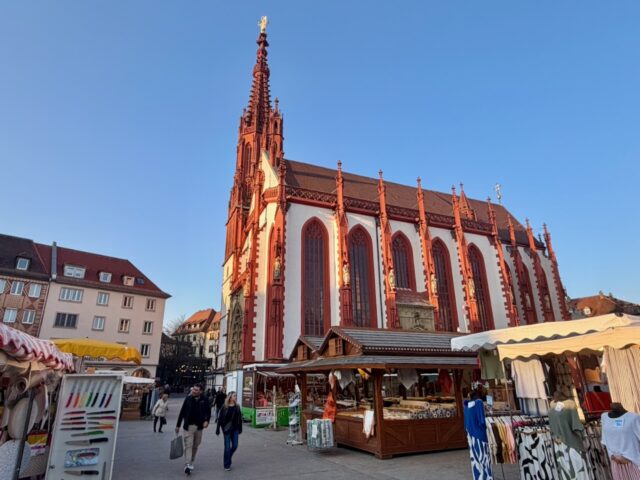
St. Mary’s Chapel is a 14th century Catholic chapel in the Gothic style. Severely damaged during WWII, the chapel was lovingly restored in the 1950’s. Two of its most famous artworks, the sculptures of Adam and Eve by Tilman Riemenschneider, are now housed in the Museum für Franken (Marienberg Fortress), with replicas displayed in their original positions. The chapel also serves as the final resting place of the renowned Baroque architect Balthasar Neumann (who designed the Würzburg Residence).
3. Falkenhaus
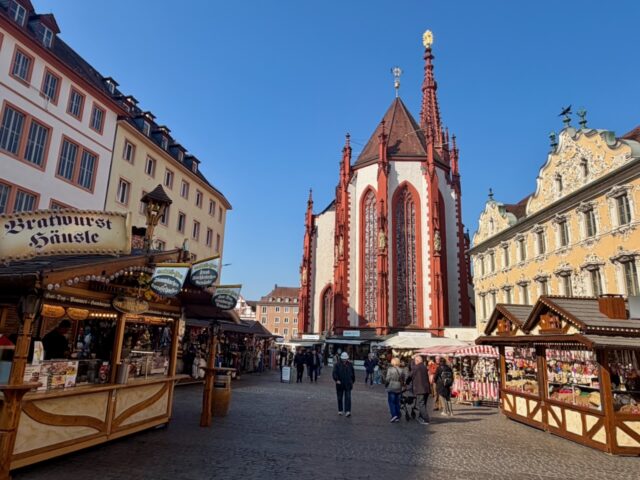
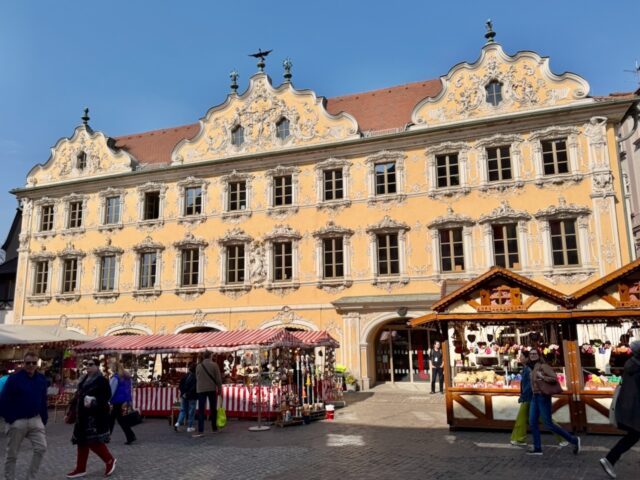
The bright yellow Falkenhaus on Marktplatz is in a gorgeous Rococo style and houses the tourist office.
4. New Minster
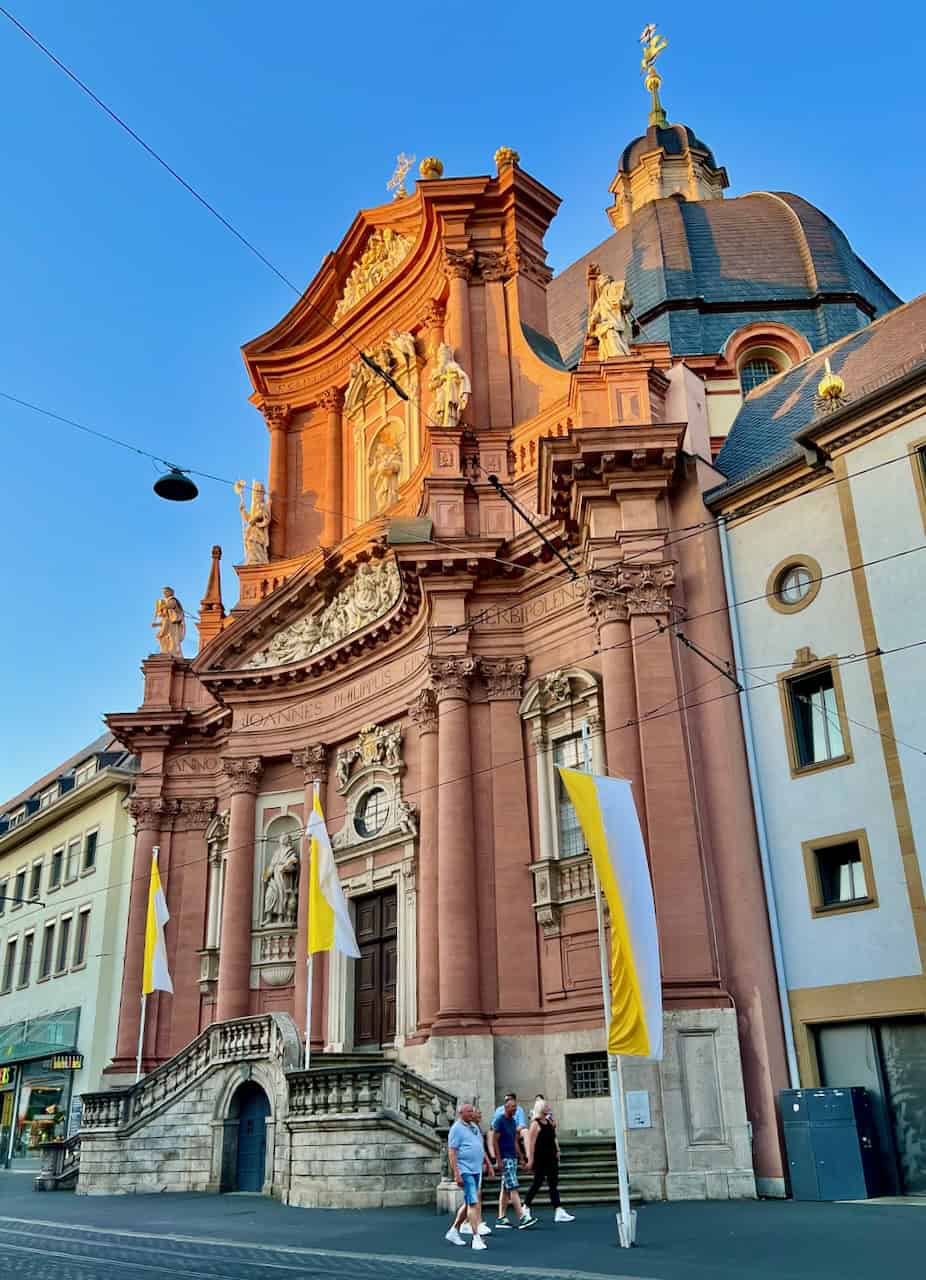
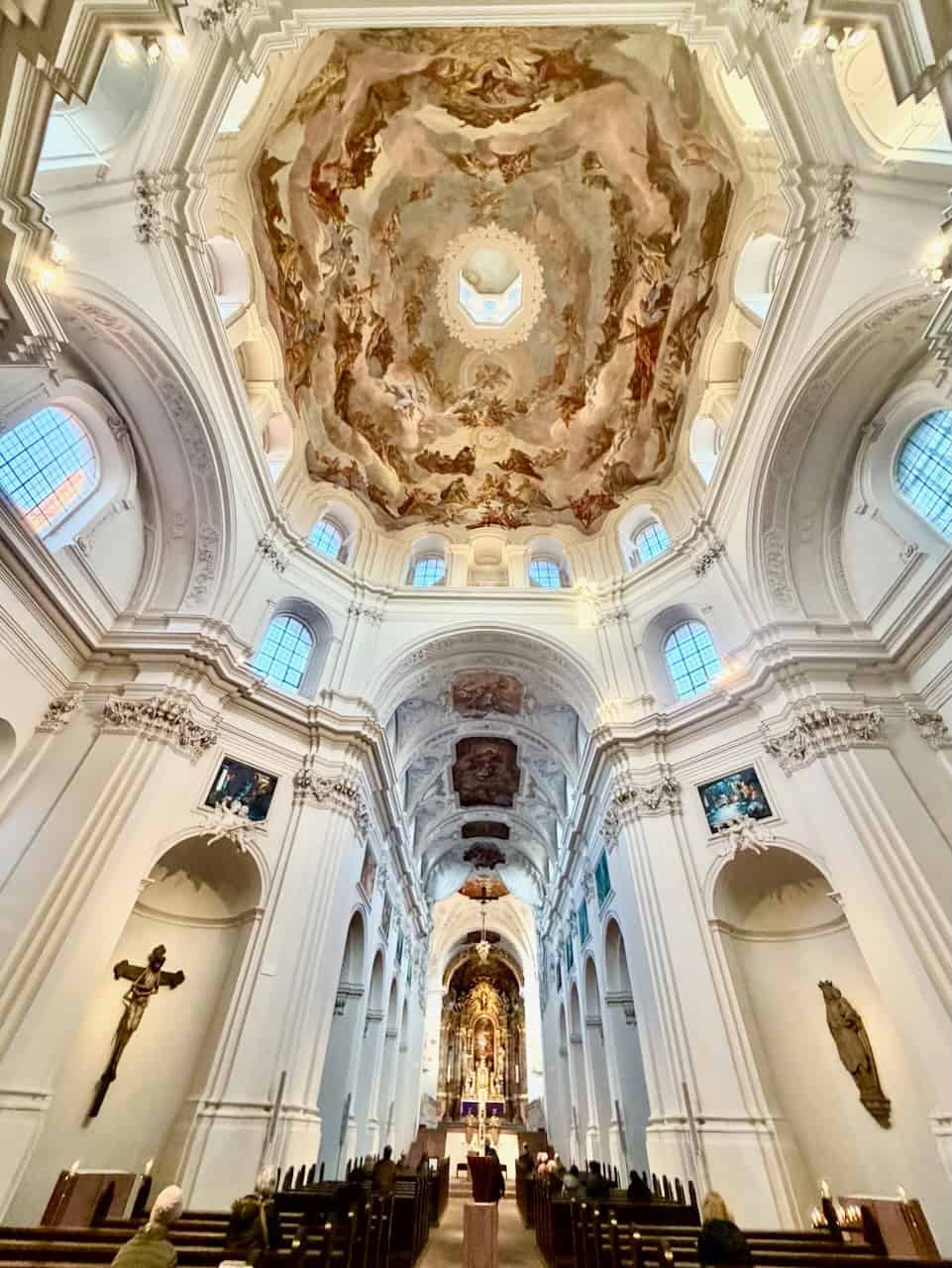
The 11th century Neumünster or New Minster was built in the Romanesque style but has a sumptuous, 18th century Baroque façade and dome. The church was the temporary seat of the Bishop of Würzburg after WWII as the Cathedral had suffered massive damage.
Lusam Garden
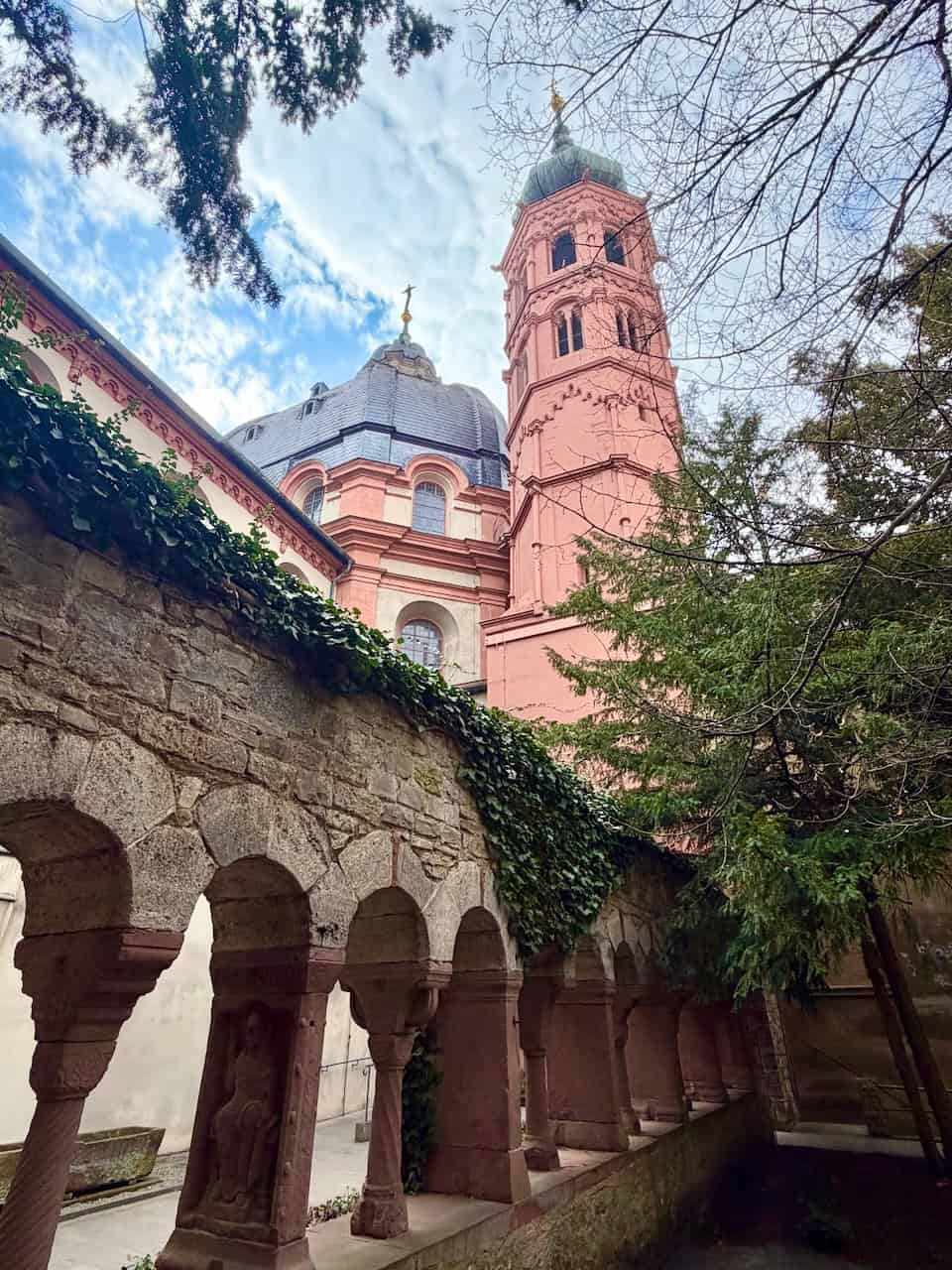
Behind the New Minster lies the Lusam Garden. This hidden garden features arcade walls of the 12th century cloister. It’s a popular gathering spot for locals, especially in the summer.
5. St. Kilian Cathedral
The 11th century Cathedral, dedicated to St. Kilian, is a masterpiece of German architecture from the Middle Ages. It’s one of the largest Romanesque churches in Germany and a prominent feature of Würzburg’s skyline.
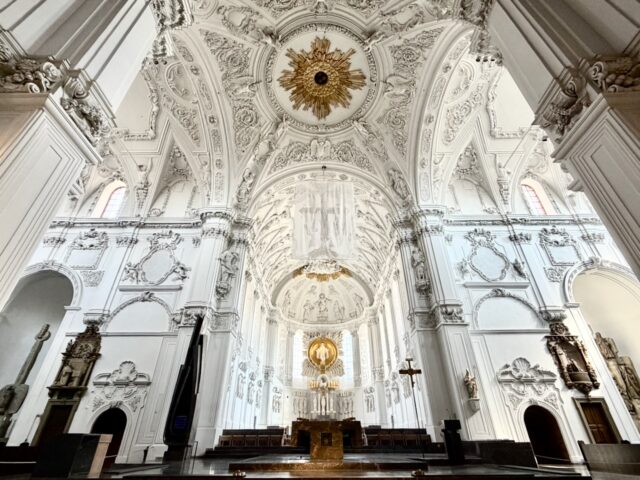
Inside, the cathedral houses important works by sculptor Tilman Riemenschneider, offering insights into the region’s artistic heritage.
6. Juliusspital winery and wine-tasting experiences
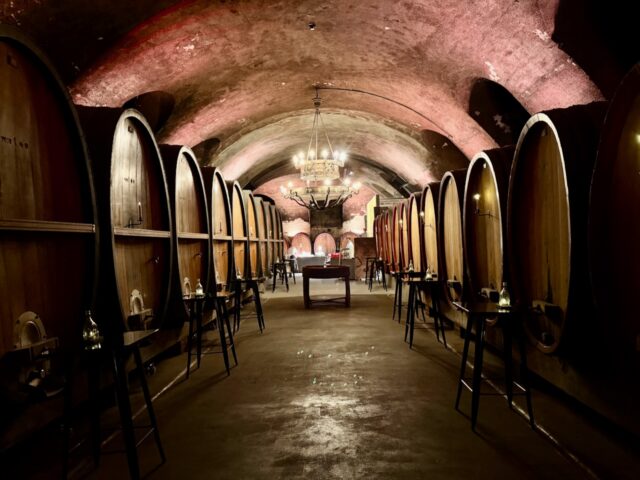
One of Germany’s oldest and largest wineries, Juliusspital is in fact a hospital! Proceeds from wine sales help to fund the hospital. Established in 1576, the hospital was expanded in the 18th century. The most notable addition was the impressive northern wing designed by Antonio Petrini, with a massive wine cellar. It still functions as a hospital and retirement home till this day.
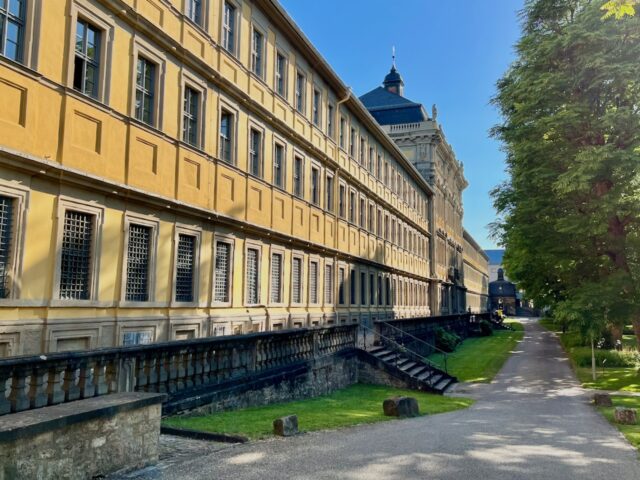
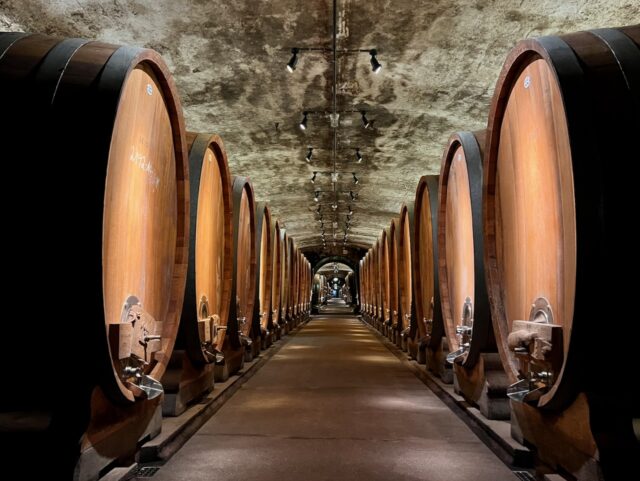
I highly recommend touring the winery and its cellar, and tasting a few of its wines. Other historic city wineries that can be visited include Burgersspital and Hofkeller.
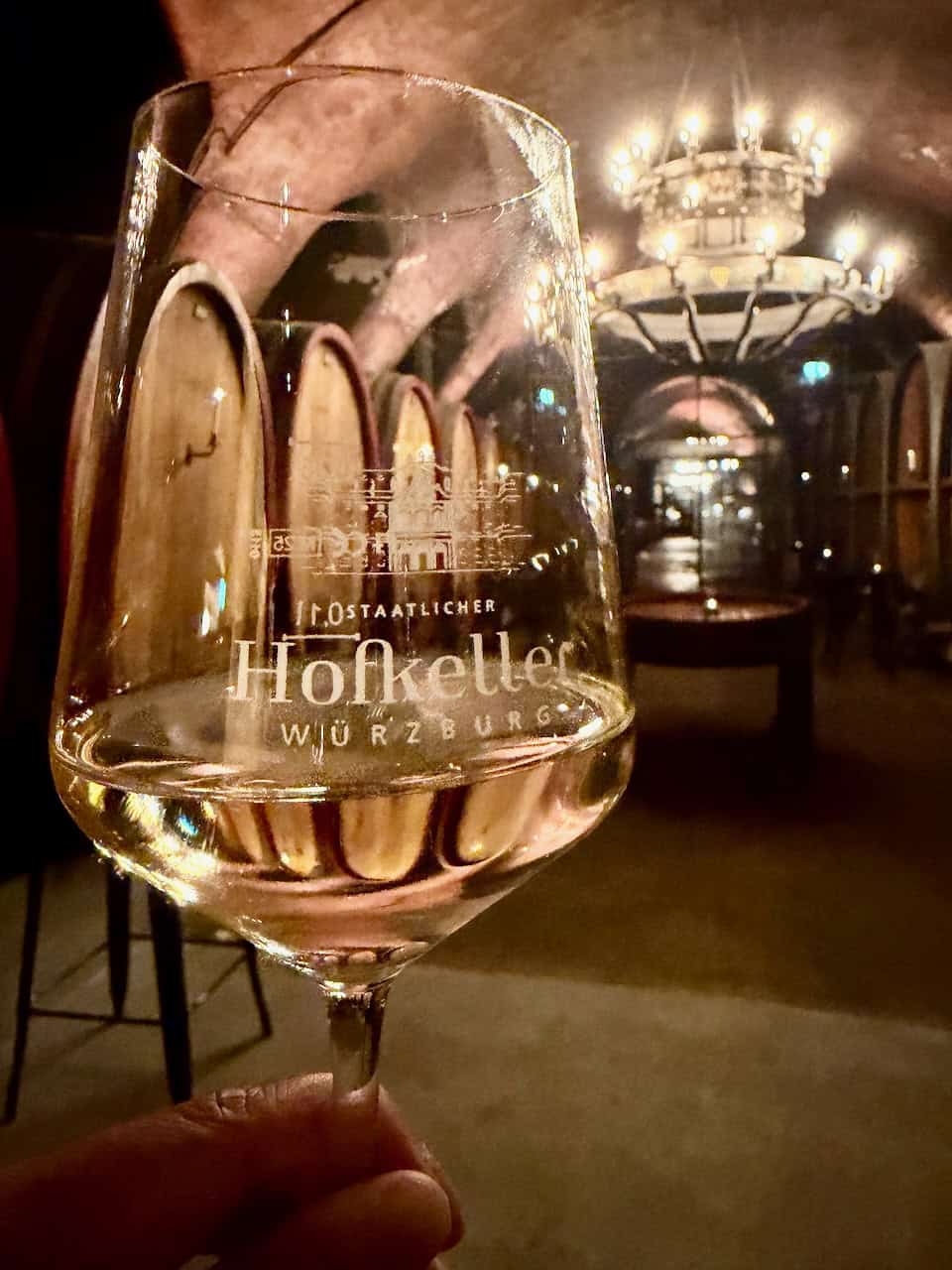
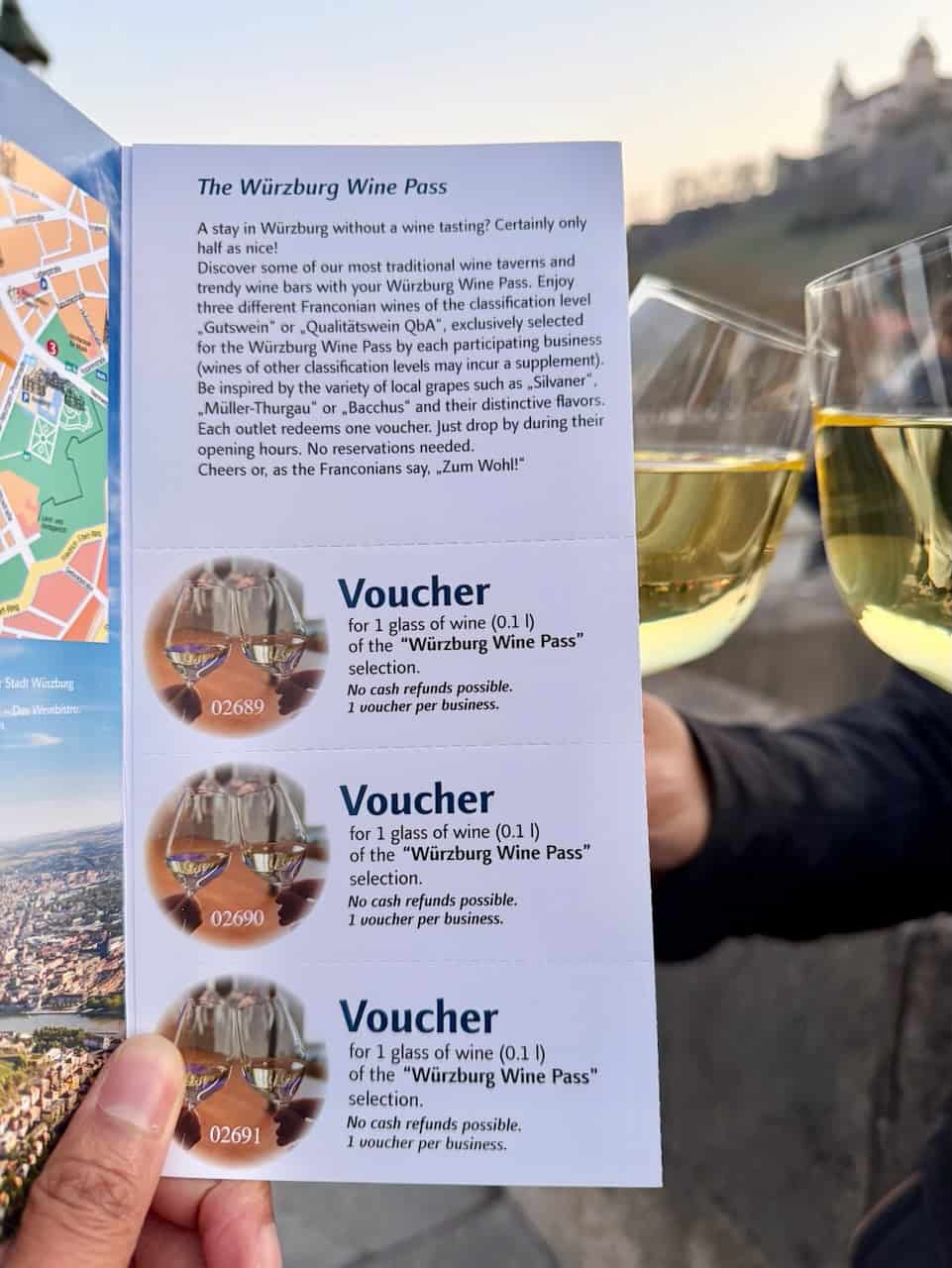
Würzburg Wine Pass: a fun wine-hopping experience
A delightful way to discover Würzburg’s wines and its renowned wine spots is to purchase a Würzburg Wine Pass (€15) at the tourist office. The pass contains six vouchers which can be redeemed for a glass of wine at various venues (including at the Old Main Bridge – see below).
7. Stift Haug
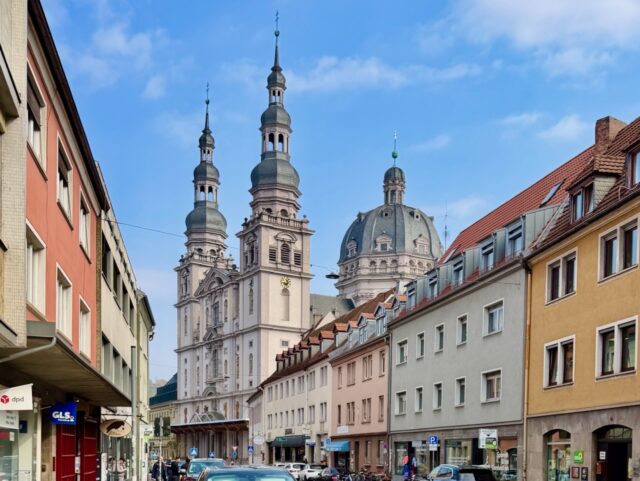
Stift Haug was built in the 17th century as the first Baroque church in Franconia. Designed by Antonio Petrini, it’s a stunning building with an impressive dome.
8. Würzburg Residence
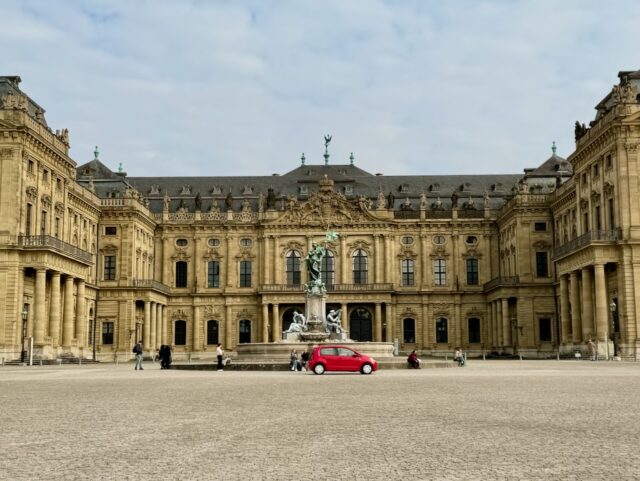
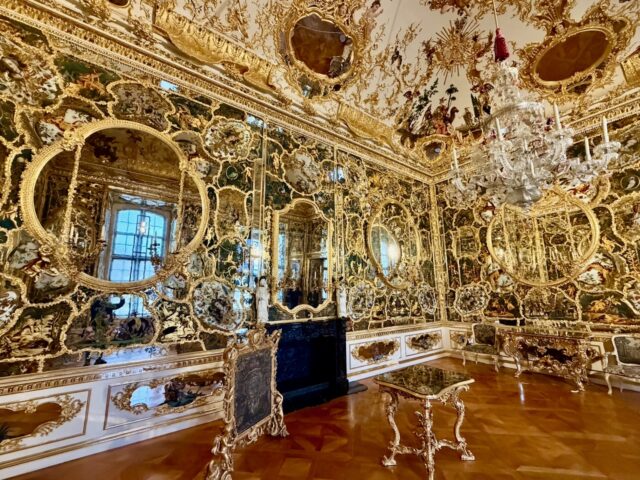
The Würzburg Residence is the city’s most famous landmark and one of Europe’s greatest Baroque palaces. Built between 1720 and 1744, it was designed by Balthasar Neumann as the grand home of the prince-bishops, and is renowned for its opulent interiors.
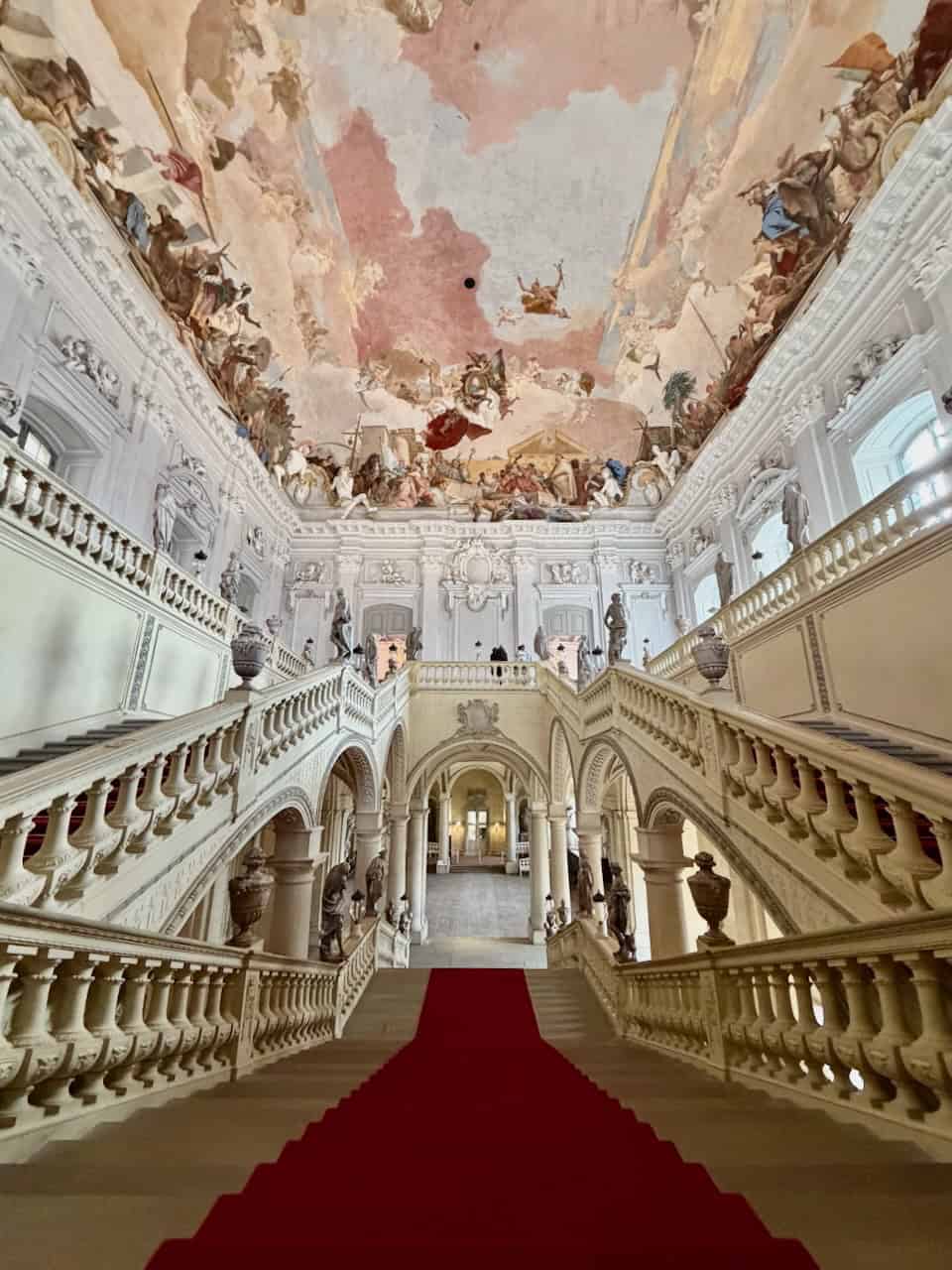
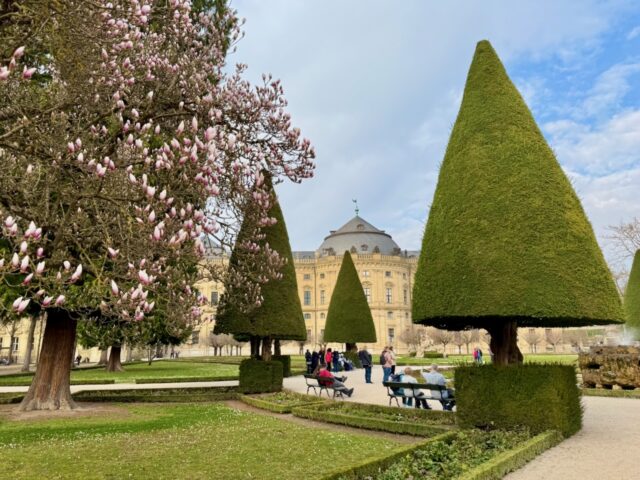
Inside, the highlight is the monumental grand staircase topped by the world’s largest fresco, painted by Giovanni Battista Tiepolo. The palace also features the lavish Imperial Hall, the ornate Hofkirche (Palace Church) and beautifully landscaped gardens known as the Hofgarten. As a UNESCO World Heritage Site, the Residence is arguably the top thing to see in Würzburg.
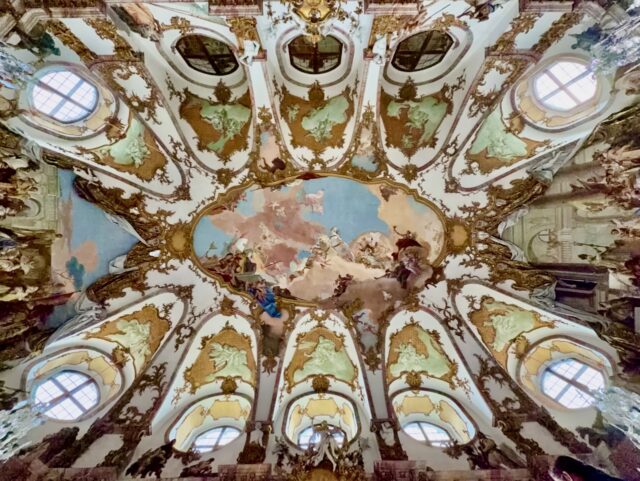
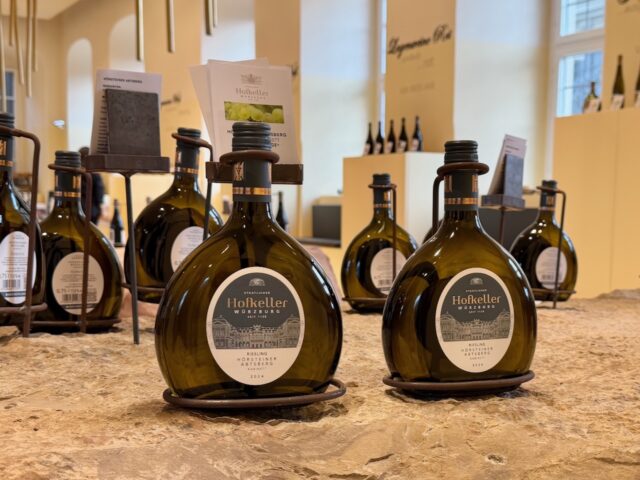
The Residence also has its own wine cellar, the Hofkeller, which can be visited with a guide.
9. Old University
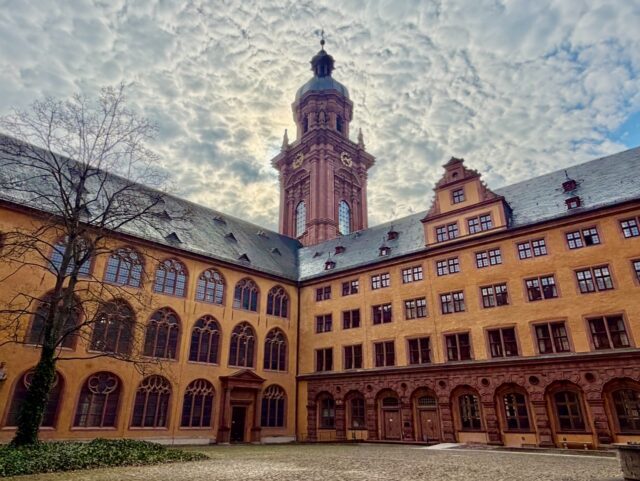
Founded in 1402, the University of Würzburg is one of Germany’s oldest. I suggest popping into the central courtyard to admire the beautiful architecture, and the adjacent Neubaukirche, a splendid Renaissance church designed by Antonio Petrini.
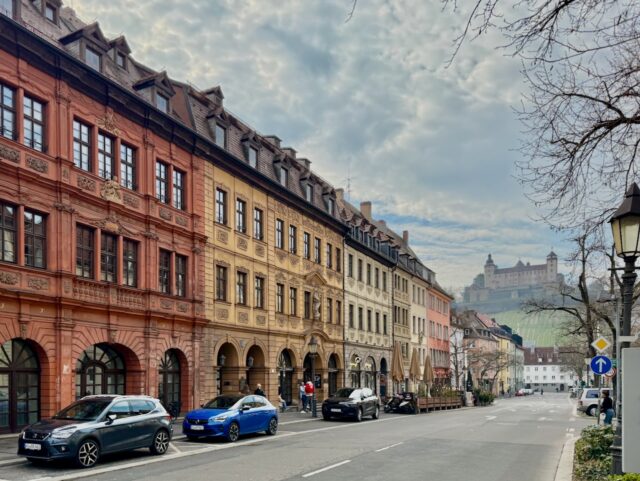
From here, stroll down Neubaustrasse along a row of absolutely gorgeous buildings in the Baroque style.
10. Old Town Hall and Grafeneckart
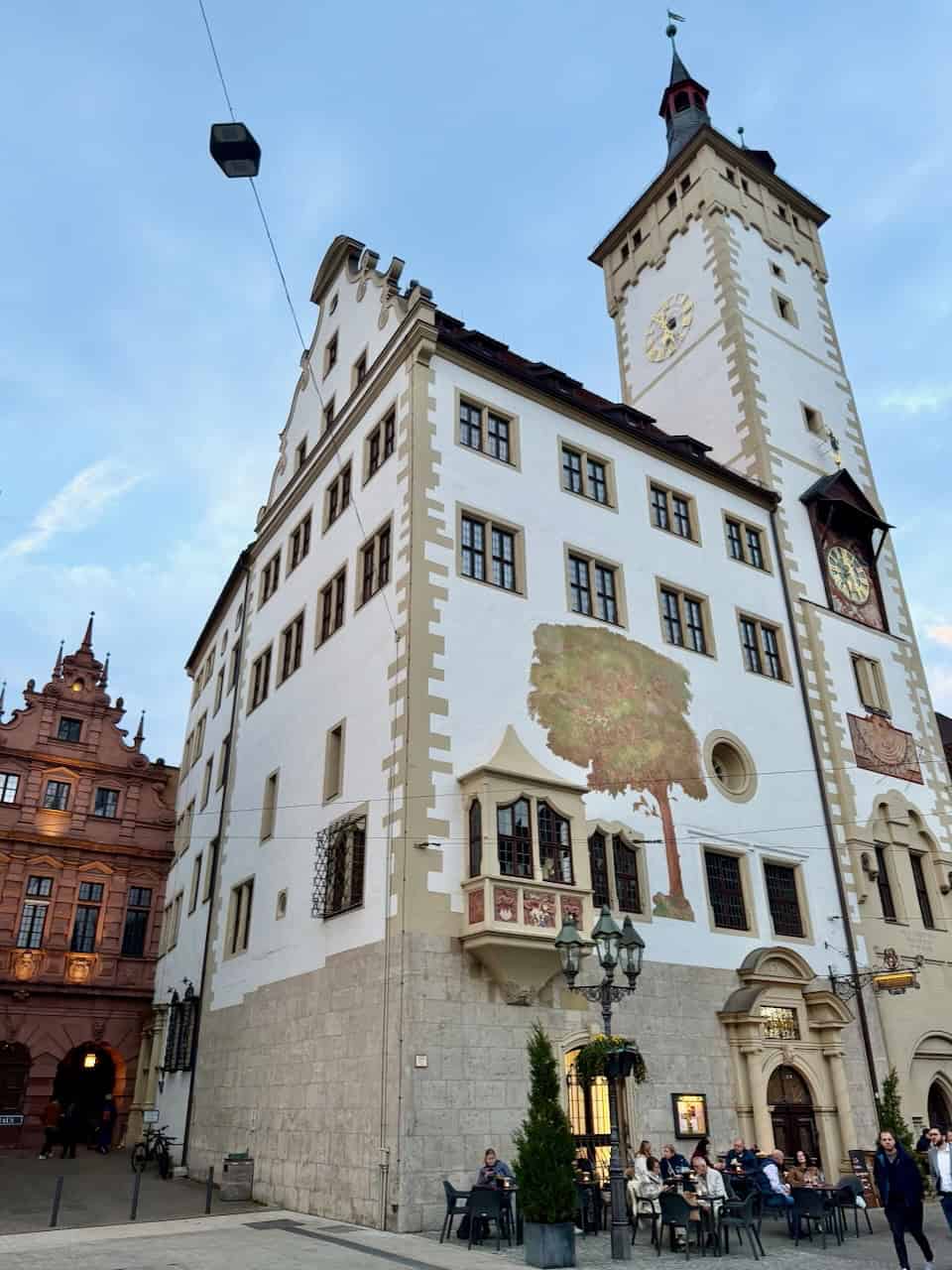
Würzburg’s historic town hall consists of buildings built during different periods. Its striking Romanesque tower, the 15th century Grafeneckart, stands as a defining landmark in the old town.
11. Old Main Bridge
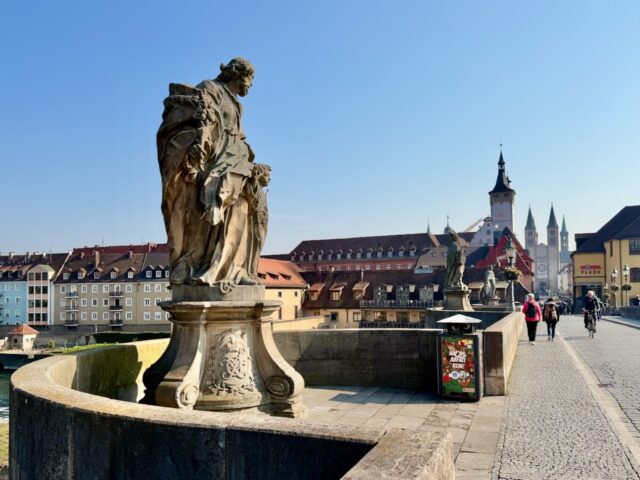
The Old Main Bridge is one of Würzburg’s most iconic sights. Built in the Baroque style between the 15th and 16th centuries, the stone arch bridge is adorned with twelve statues of saints and historically important figures such as Charlemagne and St. Kilian.

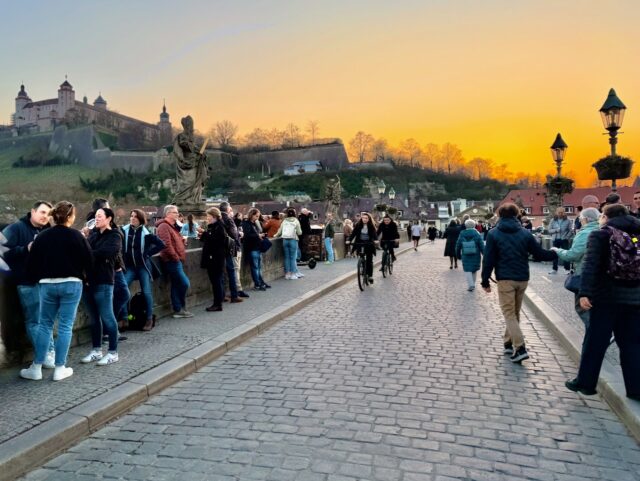
One of the top things to do in Würzburg is to join the locals for a Brückenschoppen, a glass of Franconian wine on the bridge at sunset. It’s a wonderful experience that shouldn’t be missed.
12. Marienberg Fortress
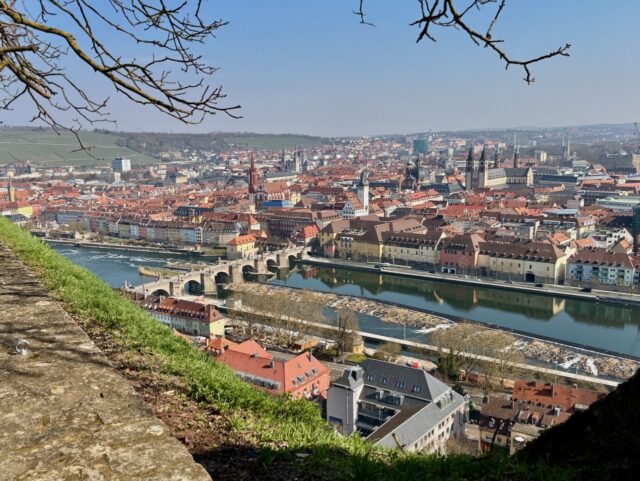
Perched high above the city on the left bank of the Main River, Marienberg Fortress offers breathtaking panoramic views of Würzburg and its surrounding vineyards. The fortress has been a key stronghold since medieval times and served as the residence of the prince-bishops before the construction of the Residence.
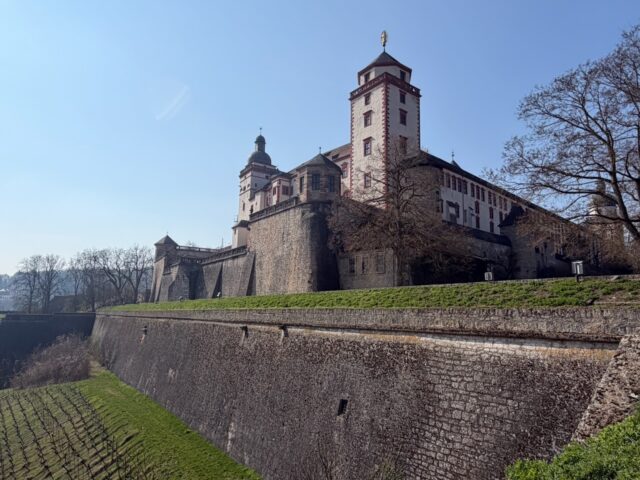
Visitors can explore museums within the fortress, wander through historic courtyards and relax in the beautifully designed Fürstengarten. The climb to the top is well worth the effort for the views alone!
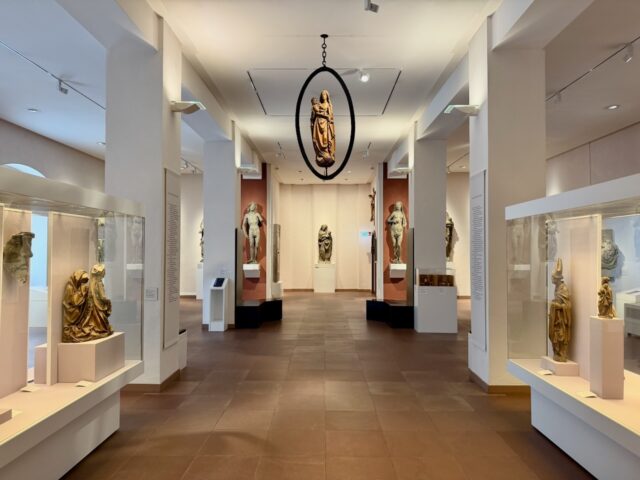
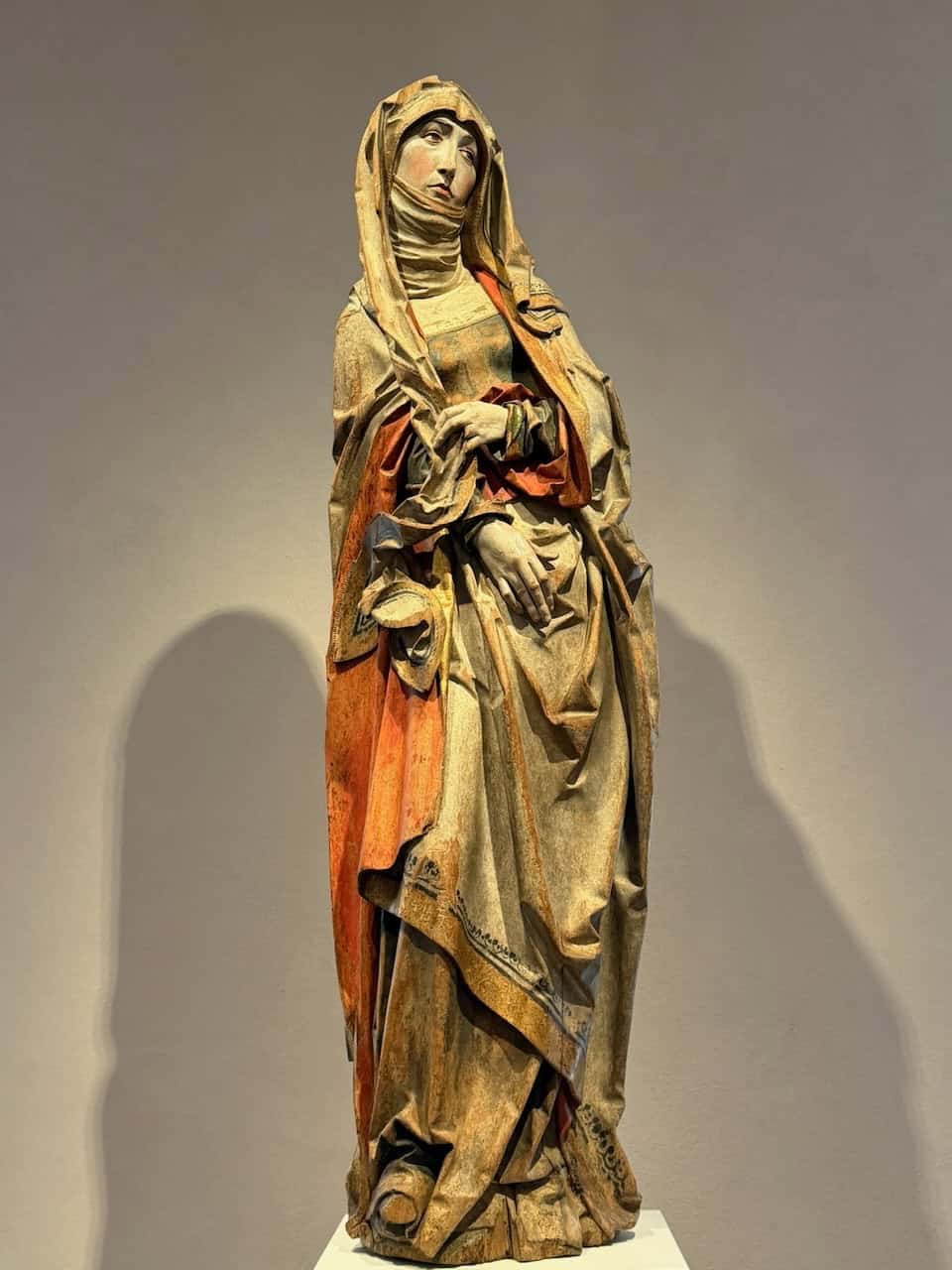
The Museum für Franken at the Marienberg Fortress houses collections related to Franconian history and art, including works by Tilman Riemenschneider (a prolific woodcarver/sculptor in the 15th-16th century) such as the statues of Adam and Eve (copies of which adorn the St. Mary’s Chapel) and the Mourning Madonna. Riemenschneider’s highly expressive wood carvings are simply astonishing!
13. Käppele
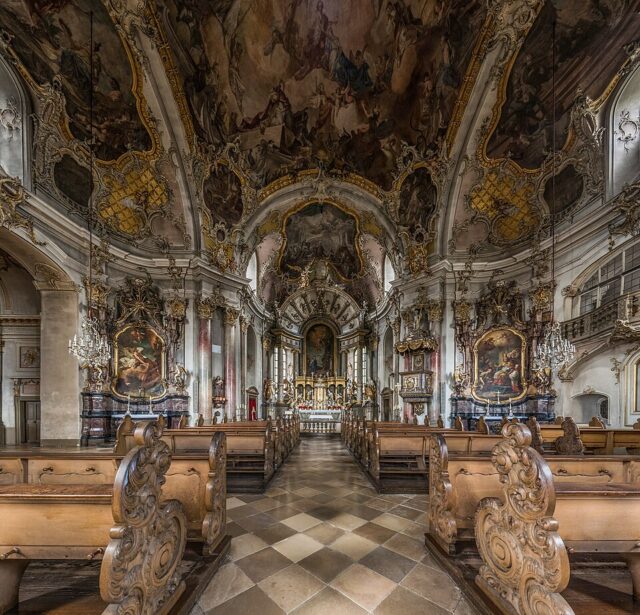
The Käppele is an 18th century Baroque/Rococo chapel by Balthasar Neumann, perched on a hill facing the Marienberg Fortress and the Cathedral. A way of the cross with 14 Stations of the Cross marked by small chapels leads up to the Käppele. It’s a bit of a climb to reach, but the chapel’s breathtaking interior and the stunning views make the effort more than worthwhile.
14. Würzburg Wine Trail
The hills surrounding Würzburg are covered in vineyards, producing distinctive wines often bottled in traditional flat Bocksbeutel bottles. Typical Franconian grape varieties include Silvaner, Riesling, Bacchus and Müller-Thurgau.
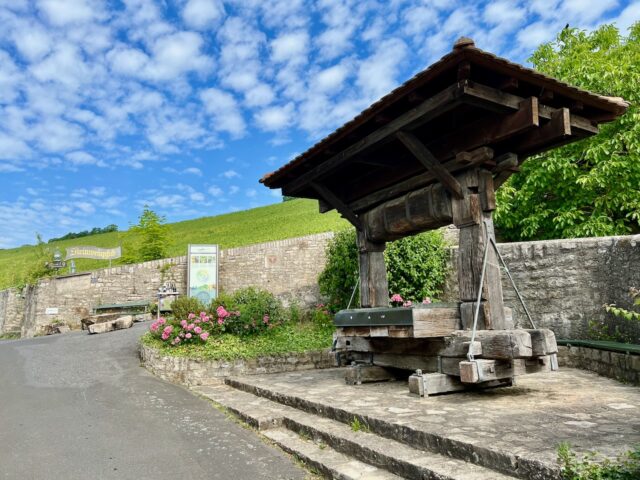
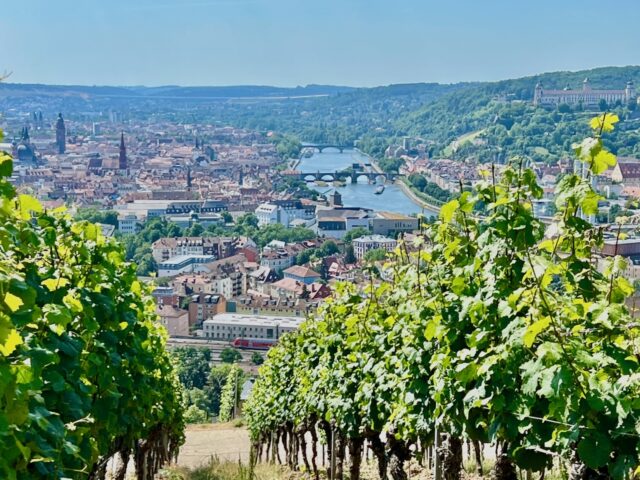
The slopes directly behind Würzburg Hauptbahnhof (Central Station) are draped with vineyards that produce some of the best Franconian wines. The Stein-Wein-Pfad is a trail that cuts through the vineyards, offering panoramic views of the city.
Würzburg festivals
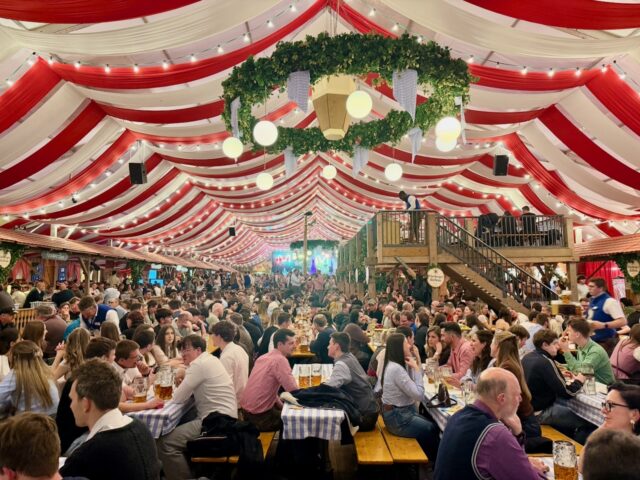
Another great reason to visit Würzburg is to attend one of its lively festivals and events. Some of the most popular festivals include the Mozart Festival (May/June) and Kiliani Volksfest (July). Another fun festival is the Würzburger Frühjahrsvolksfest (March), a fun fair and beer festival held to celebrate the arrival of spring. It’s a boisterous affair with music, dance, local food and LOTS of beer! If you’re looking for a more local ‘Oktoberfest’ beer festival experience earlier in the year, make a note of this event.
Where to eat in Würzburg
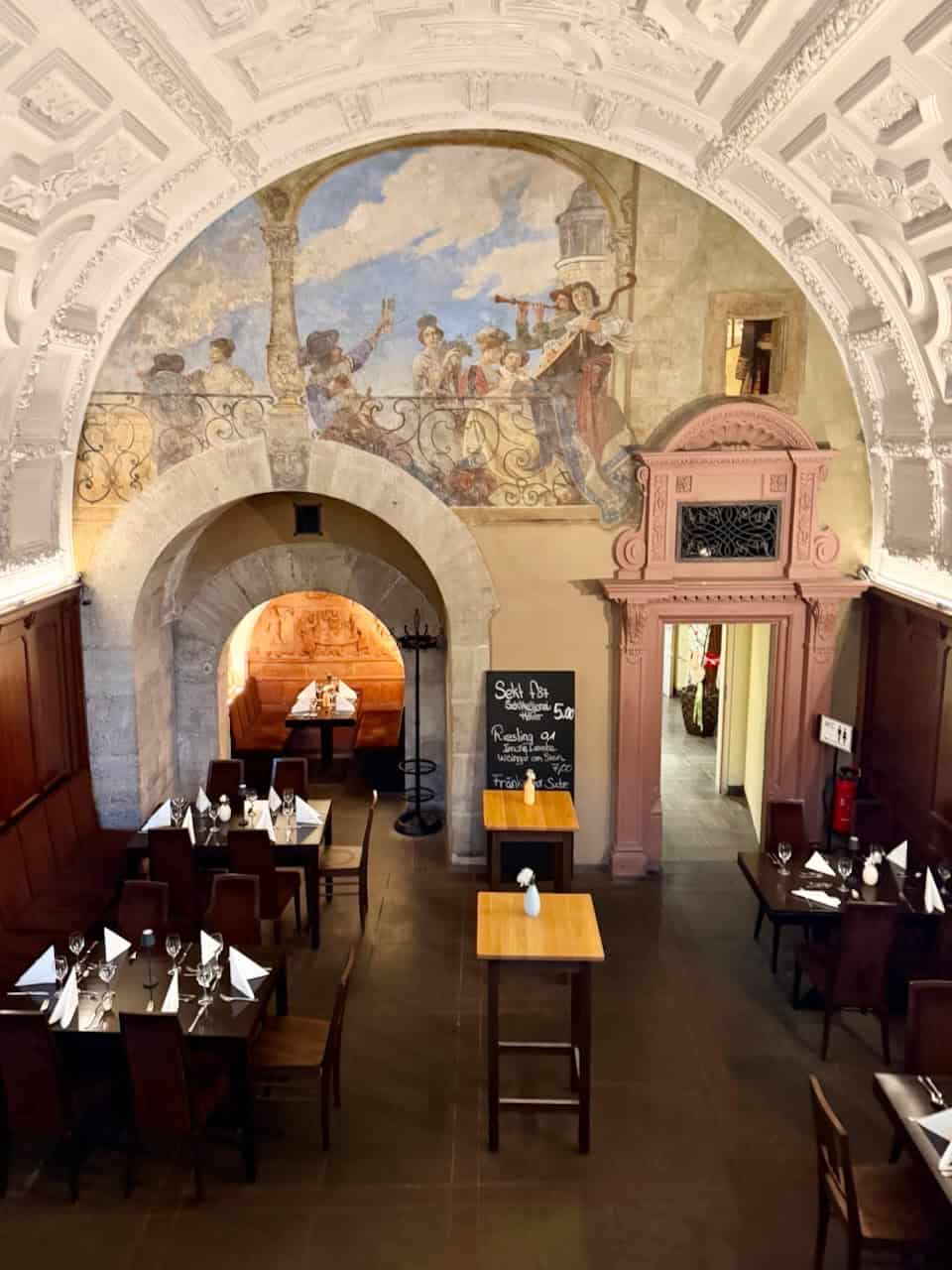
There’s no shortage of top-notch restaurants in Würzburg. For traditional Franconian cuisine in a historic setting, I recommend Würzburger Ratskeller. Located in the cellar of the Ratshaus (Old Town Hall), this restaurant serves hearty local specialties in a vaulted space filled with frescoes.
Just up the road from the Ratshaus, at the Old Main Bridge, is another restaurant I can recommend: Gasthaus Alte Mainmühle. Located in an old mill, this restaurant serves delicious local food with a contemporary twist, and boasts the best views of the Main Bridge and Marienberg Fortress.
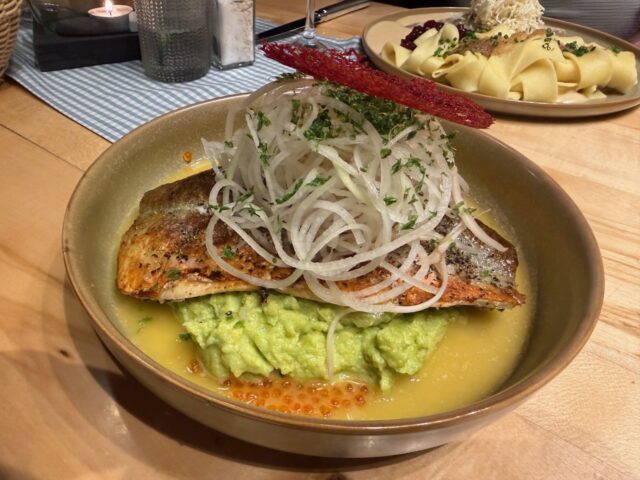
Another restaurant I enjoyed is Weinstuben Juliusspital. Located at the Juliusspital winery, it’s a wonderful place to enjoy Juliusspital wines and terrific Franconian food.
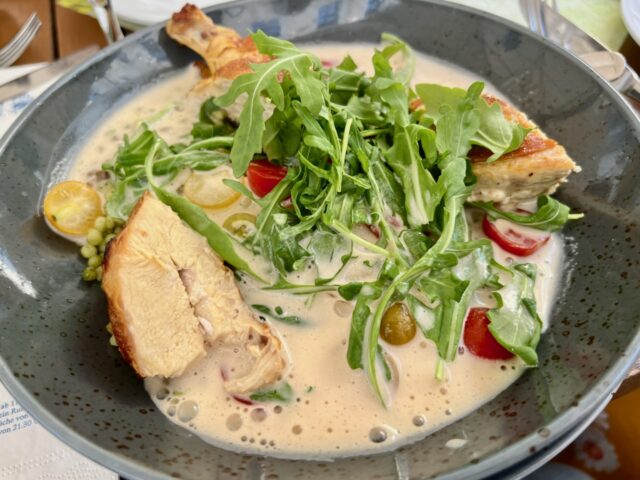
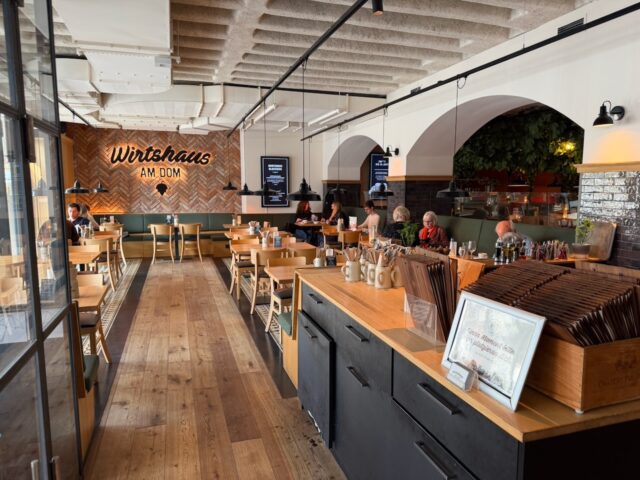
Behind the Cathedral is another favourite of mine: Wirtshaus am Dom. This bright, airy restaurant serves absolutely delicious local dishes. Portions are sizeable and the service is fantastic!
Where to stay in Würzburg
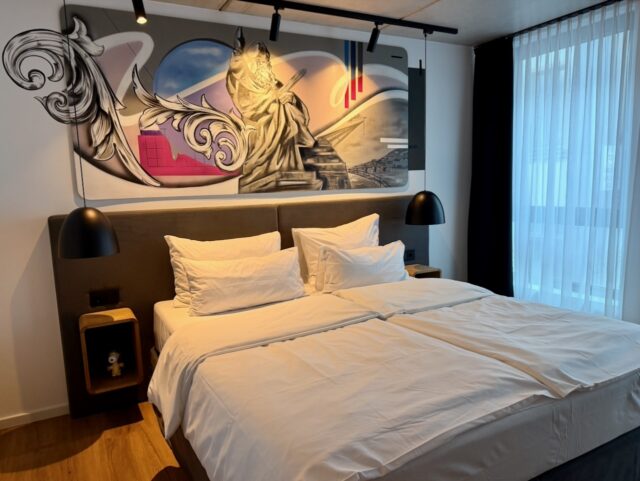
There are many accommodation options in Würzburg. One hotel I absolutely loved was The Barthels Boutique Hotel.
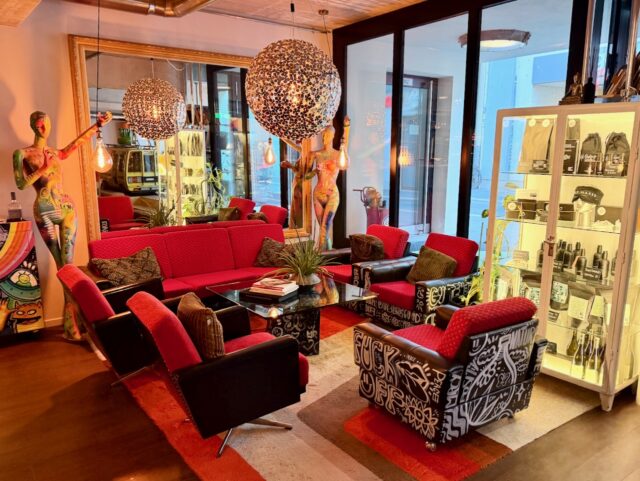
It has a very central location, just behind the New Minster and the Cathedral. The interior is quirky and colourful, and the rooms are spacious and comfortable. There’s also a ‘secret’ rooftop terrace that offers fabulous views of the Würzburg skyline.
Getting to Würzburg
Roughly situated between Frankfurt and Nuremberg, it’s easy to reach Würzburg by train. Frankfurt has an international airport whilst Nuremberg has a handy, regional airport with links to major European cities. Read about my wonderful road trip along the Main River from Frankfurt to Nuremberg.
Read more about Germany on Velvet Escape
• A northern Germany road trip
• Trier: where ancient Rome meets medieval Germany
• Things to see and do in Heidelberg
• The castles of King Ludwig II
• Things to see in Bremen