
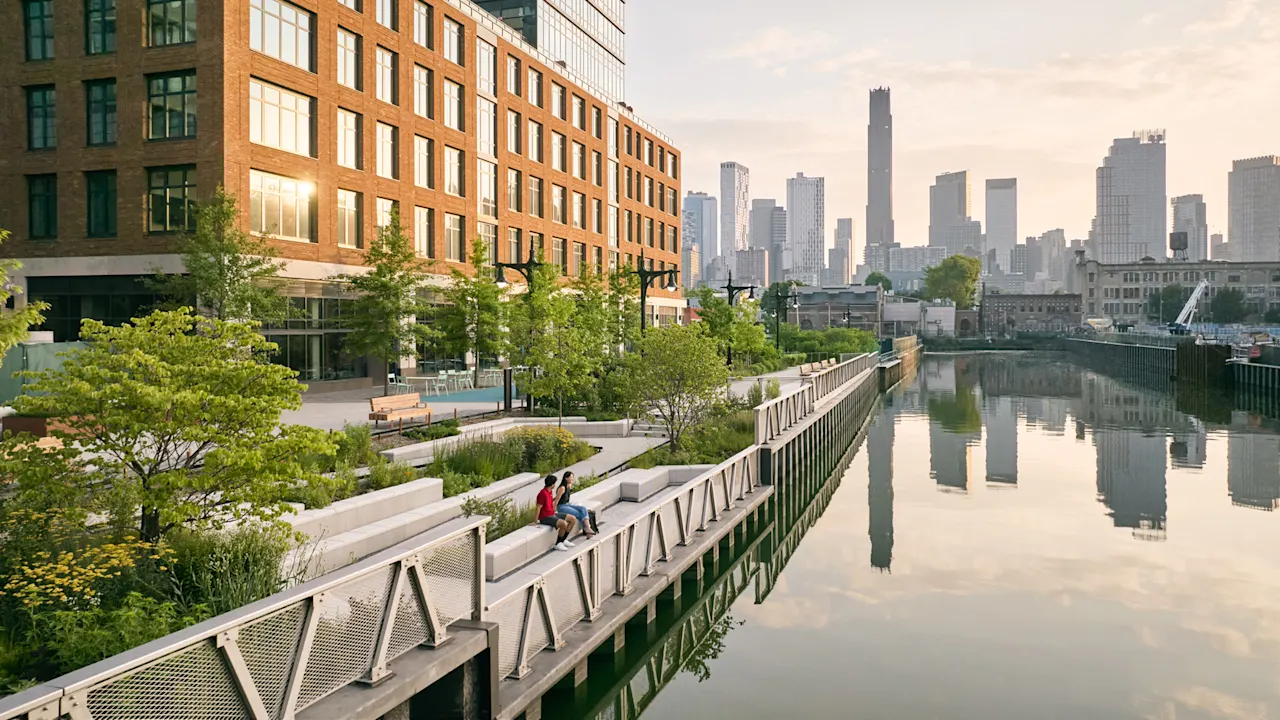
For a Superfund site, the Gowanus Canal is looking surprisingly nice these days. Long an industrial dumping site, the Brooklyn waterway has undergone decades of interventions to undo that damage. Now, after years of planning and community outreach, redevelopments along the polluted Gowanus Canal waterfront are giving the area a welcoming residential gloss.
Two recently opened projects exemplify the transformation underway along the Gowanus Canal. Both designed by the landscape architecture firm Scape and in line with a master plan it helped release in 2019, the projects are a preview of what it will look like when the Gowanus completes one of the most dramatic urban turnarounds in recent times.
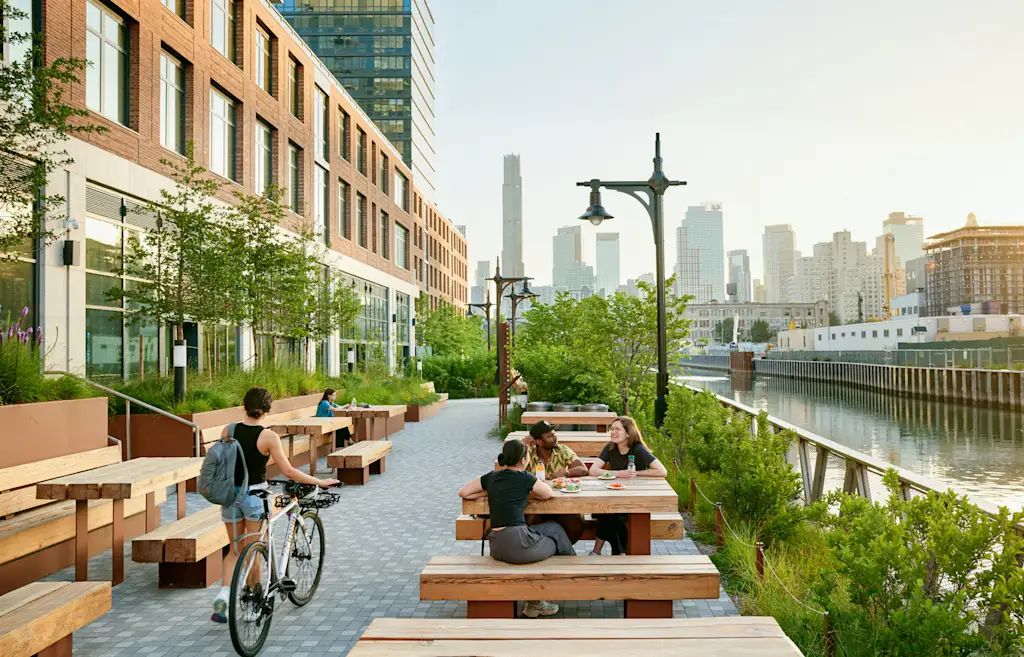
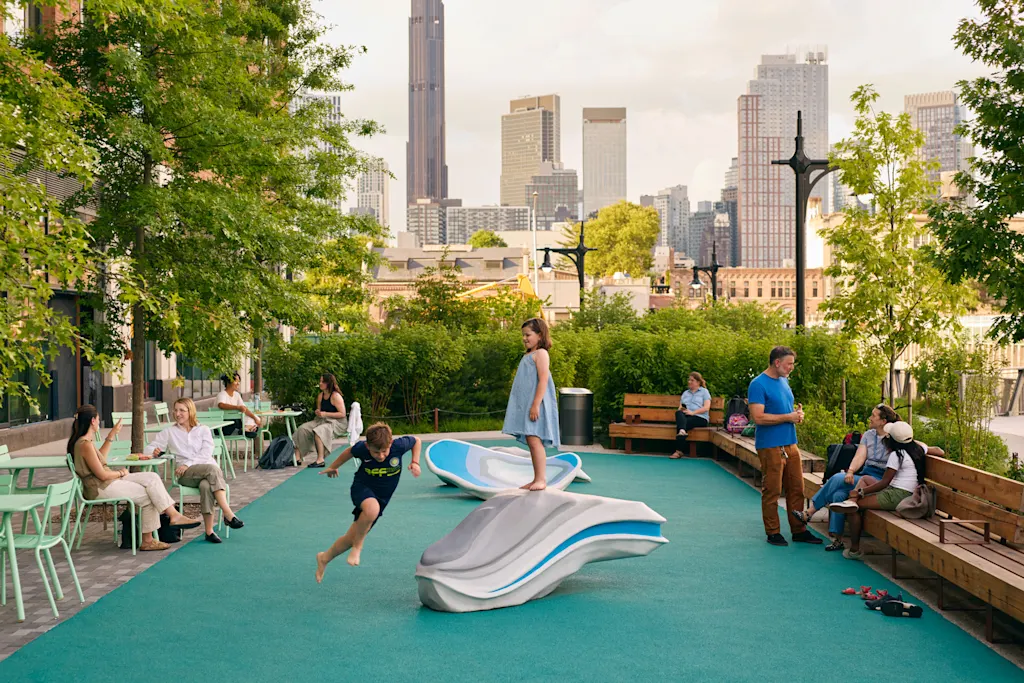
The two projects are new public spaces that begin to reconnect people to the Gowanus Canal’s waterfront as it nears completion of its environmental cleanup. One is a waterfront plaza and esplanade wrapping a two-tower residential and office development. The other is a linear waterfront park with a playground, picnic area, and gardens. Both are rebuilding the ecology along the canal while significantly increasing access to a waterway that had spent decades off limits.
“The Gowanus as an ecosystem and as a neighborhood is so interesting because it is being remade at a systemic level in so many different ways over a relatively short period of time for an urban area,” says Gena Wirth, design principal and partner at Scape.
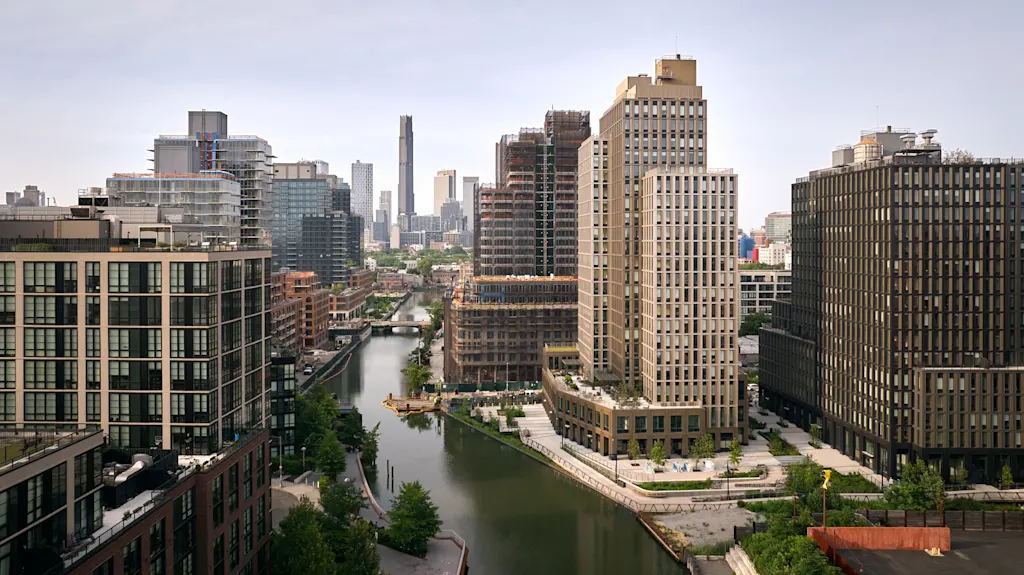
Much of the change along the canal has been spurred by a rezoning process launched in 2014 that enabled the former industrial land to be redeveloped into a mixed-use neighborhood. It was an official change for an area that had been slowly evolving through the grassroots efforts of community groups focused on environmental justice, ecological restoration, and public space.
One group, the Gowanus Canal Conservancy, was founded in 2006 and has been working since then to clean up and restore the canal and its neighborhood, and has been a key part of the transformation now underway.
“We have years of experience doing a lot of hands-on stewardship on street trees, rain gardens, and guerrilla gardens throughout the neighborhood and through that we have really developed a very fine-tuned understanding of what biodiversity has existed in the neighborhood, specifically before the cleanup, and what types of landscapes can really thrive here,” says Andrea Parker, executive director of the Gowanus Canal Conservancy.
In 2017, the conservancy hired Scape to create a master plan for the area, which was published in 2019. “This Lowlands master plan was really about advocating for positive change and putting forward a vision for the future,” says Wirth. “It’s been a real estate speculative market for like 40 years. So it’s not under-considered, but it’s been kind of abandoned from a functional perspective for a while.”
The plan set standards for how future development along the canal could contribute to its cleanup and restoration. It creates legal frameworks and requirements for how public and private development could occur there, while navigating the complexities of a federal cleanup, state and local oversight, and a large mix of landowners.
Now, it is being used to help shape more than a dozen active development projects along the canal. Scape’s two recently opened park spaces, and a previously completed esplanade, are setting the standard for how the area will develop.
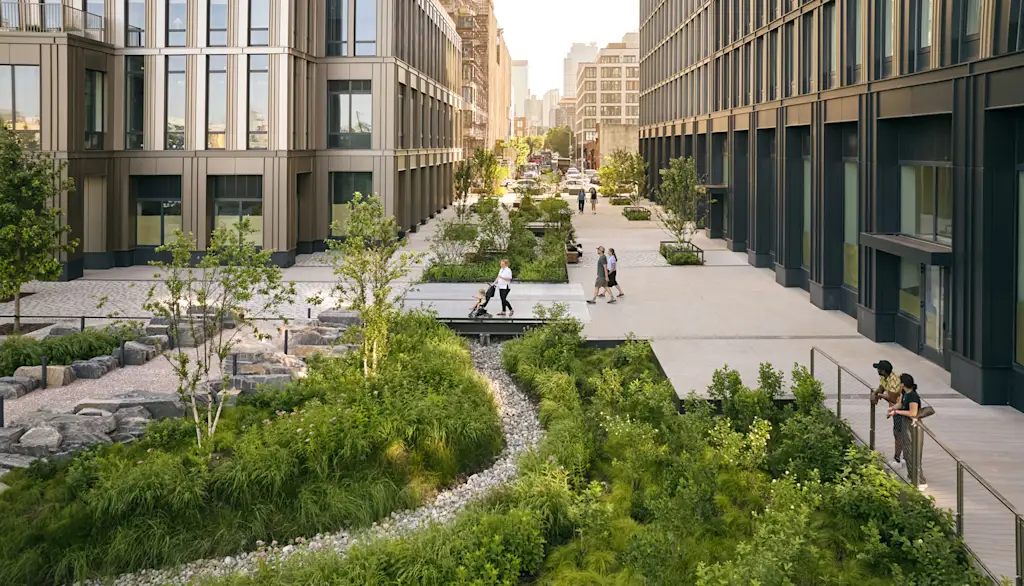
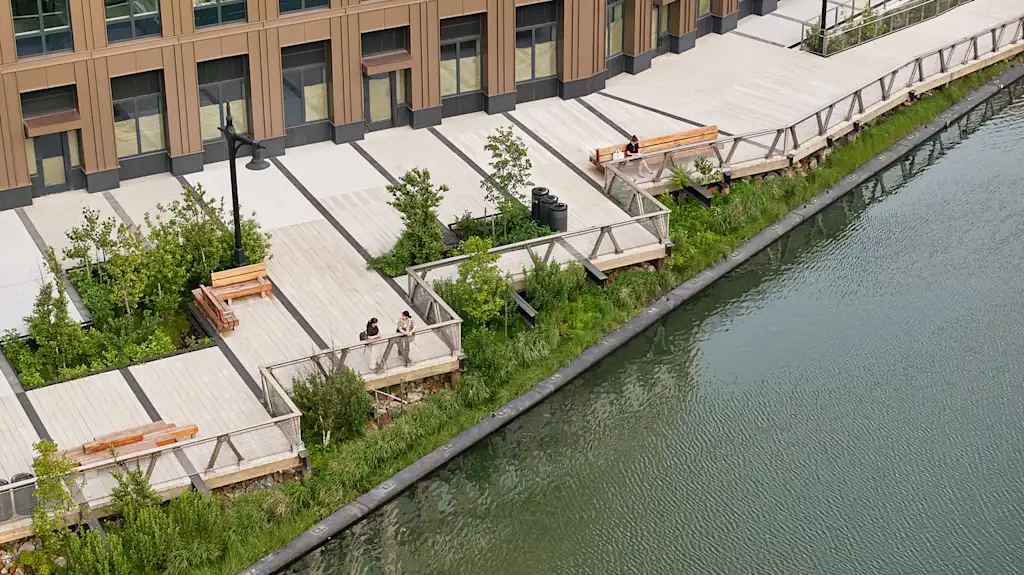
The recently completed plaza and esplanade around 420 Carroll Street is what Wirth calls an “eco basin,” or a recessed garden running between two buildings and surrounded by walkways. The ground is designed to drain rainwater into the basin, where it is filtered by the garden before draining into the canal, much like rainwater would have drained through the area back when it was a tidal wetland.
Multiple levels of walkway along the water allow different views while also serving as floodable spaces during king tides. “This lower landscape terrace is designed to flood, and it does flood,” Wirth says. “If you’re a user of landscape, it’s fine, you can just walk around the higher zone. But on a regular sunny day, you’re still able to get close and get down to the water.”
The other new project, a linear park outside Sackett Place, creates even more connection to the water, which is still considered unsafe to touch. It features a stepped get-down that will function as an access point for kayakers once the canal’s water is cleared for recreational use. The picnic areas and playground on either side of this terracing also look directly over the water.
The canal is still in the middle of remediation, with the goal of it being completed by mid-2030s. It’s also dealing with continued issues around combined sewer overflow, which dumps hundreds of millions of gallons of raw sewage into the canal during rainstorms.
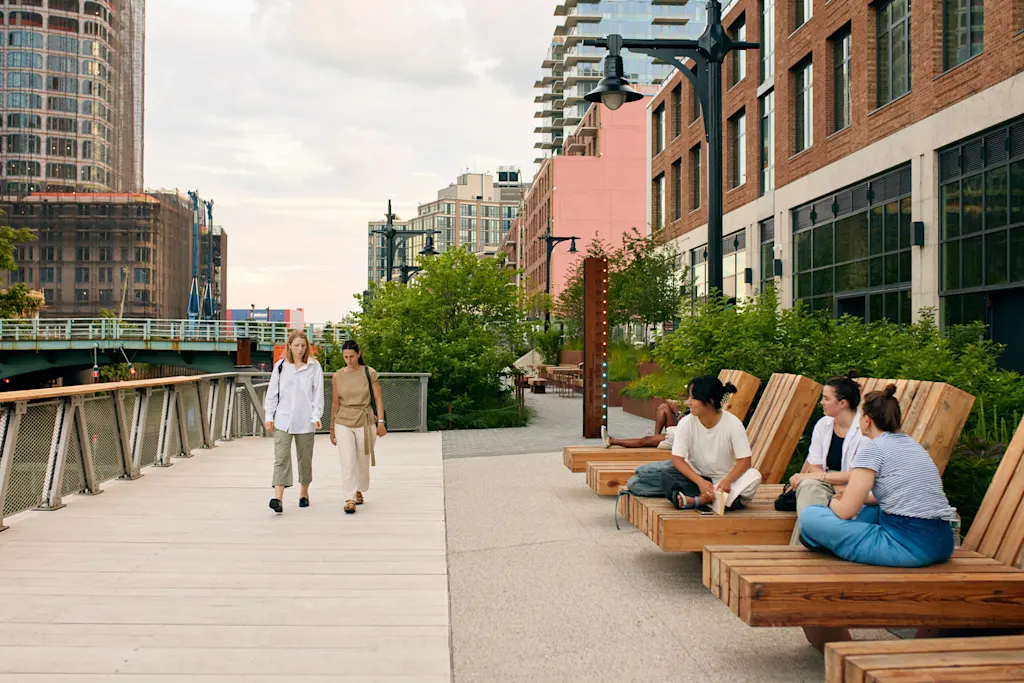
Scape has about 10 other projects in various stages of development along the Gowanus Canal waterfront, each filling a bit of a former wasteland with active and ecologically healthy landscapes. “The vision is coming together,” Parker says. “And I do think that as we actually start seeing these landscapes meet, that’s when we’re really going to start feeling it.”
It’s been a long time coming for Parker, and for Wirth, who first got involved in Gowanus in 2010 after moving to New York, doing volunteer landscape work planting plugs of saltmarsh cordgrass at the water’s edge—a species that now features heavily in Scape’s plantings on the canal.
Back then it was largely unofficial work, involving some fence-hopping. Now, those same stretches of the canal are being reopened in ways few people could have foreseen 10 or 20 years ago. “I never thought I’d be picnicking along the Gowanus when I first moved to New York City,” says Wirth, “but now it’s quite a lovely space to be.”